


Mad Monkey Transfers is a sensible starting point if your shop already has an ordering process that works. The limit is simple: an existing supplier is not automatically the right fit for every artwork layout or production workflow. The best Mad Monkey Transfers alternative in 2026 is DTF2GO for custom cut-to-size, ready-to-press DTF transfers; in-house DTF printing is the alternative when you need to control printing yourself.
- Dtf2go is the best Mad Monkey Transfers alternative for decorators who need custom cut-to-size, ready-to-press DTF transfers in 2026.
- Choose a DTF gang sheet when you want to arrange multiple designs together before production.
- Choose in-house DTF printing when direct control of printing matters more than outsourcing transfer production.
- Keep Mad Monkey Transfers if its current output and ordering process meet your shop's requirements.
Why this matters
A transfer supplier affects what reaches your press: the artwork you submit, the format you receive, and the preparation left for your operator. For an apparel decorator, promotional product business, or print shop, those details determine whether a transfer fits the job as ordered or creates another production step.
Start with the format. DTF2GO sells individual cut-to-size DTF transfers for shops that want separate, ready-to-press pieces. If your team prefers to arrange several designs on one sheet, compare that workflow with a gang sheet instead. The right 2026 supplier choice starts with how your press operator receives the artwork, not with a supplier name alone.
Mad Monkey Transfers alternatives at a glance
This comparison separates a transfer supplier from production methods. In-house printing and screen printing are valid alternatives for some jobs, but neither is another ready-to-press DTF supplier. Mad Monkey Transfers remains the benchmark; its current specifications need to be checked directly rather than assumed.
| Option | Best for | Standout feature | How it differs from Mad Monkey Transfers |
|---|---|---|---|
| Mad Monkey Transfers | Shops satisfied with their current supplier workflow | An ordering process your team already knows, if you use it today | The benchmark; confirm its current formats and artwork requirements directly |
| DTF2GO | Shops seeking custom cut-to-size, ready-to-press DTF transfers | A stated 9-color print system and cut-to-size output | Explicit cut-to-size and gang-sheet options in the supplied catalog |
| In-house DTF printing | Shops that want to produce transfers themselves | Direct control of the printing step | Moves transfer production into your shop rather than another supplier |
| Screen printing | Repeated runs of the same artwork where a different print method fits | Prints through prepared screens rather than DTF film | Changes the decoration method, not just the supplier |
For a DTF-to-DTF comparison, DTF2GO is the direct alternative in this list. The other options answer a different question: whether you should outsource transfers at all, or whether the job calls for another printing method. Keep that distinction clear when evaluating a 2026 production plan.
1. DTF2GO: best for ready-to-press cut-to-size transfers
DTF2GO produces custom cut-to-size DTF heat transfers for apparel decorators, promotional product businesses, and print shops. It also lists a print-ready gang-sheet option. That makes it the closest direct fit here when you want another source of DTF transfers rather than a new production method.
The brand describes a 9-color print system and coverage of 97% of all Pantone colors. Treat those as specifications to test against your own artwork, especially if a customer requires a close color match. They do not replace a physical comparison of the finished transfer on the garment you actually decorate.
Where DTF2GO shines
- Separate placement pieces: Cut-to-size transfers suit an operator who wants individual artwork ready to position at the press.
- Another artwork layout: The print-ready DTF gang sheet gives you a way to submit multiple designs together rather than treating every graphic as a separate piece.
- A relevant output choice: Both formats address transfer production for shops that press apparel; neither requires your shop to print DTF film in-house.
Where DTF2GO falls short
- It is still outsourced printing. If your requirement is direct control of the printer and its output during production, ordering transfers does not meet it.
- A gang sheet takes layout work. Someone must arrange the artwork and check spacing before submitting it.
- A stated color capability is not a job approval. Your team still needs to inspect a transfer against its approved artwork and intended garment.
Best for: Decorators and print shops that want cut-to-size, ready-to-press DTF transfers, with a gang-sheet format available for artwork they prefer to group.
| Decision point | DTF2GO | Mad Monkey Transfers |
|---|---|---|
| Cut-to-size DTF format | Explicitly offered | Confirm the current format with the supplier |
| Gang-sheet format | Explicitly listed | Confirm the current format with the supplier |
| Color-system detail in the supplied information | 9-color system; stated 97% Pantone coverage | No specification supplied for this comparison |
| Production model | Order finished transfers | Confirm the current ordering and output details directly |
Verdict: Buy when cut-to-size, ready-to-press output is your deciding requirement. Request comparable artwork from each supplier before changing production work that depends on a specific color or hand feel.
2. In-house DTF printing: best for direct production control
In-house DTF printing is a production choice, not a transfer vendor. Your shop takes responsibility for printing transfers rather than ordering finished pieces from Mad Monkey Transfers or DTF2GO. That distinction matters when the point of switching is control over the printing step itself.
It also changes the work your team owns. Artwork preparation remains necessary, while film printing and the associated production checks move inside your operation. If your actual goal is simply to receive transfers already prepared for pressing, this is a larger change than switching suppliers.
Where in-house DTF printing shines
- Printing stays under your control. Your team decides when to run the artwork and inspects output as it is produced.
- The workflow can be built around your jobs. You decide how to organize designs for internal production rather than submitting them to an outside printer.
Where in-house DTF printing falls short
- You take on the production work. Printing transfers becomes an internal task rather than something a supplier delivers.
- It does not solve a press-side staffing problem. Your team still has to prepare artwork, inspect transfers, and apply them correctly.
- It is not a like-for-like vendor comparison. Compare the full workflow, not just the finished film.
Best for: Shops whose priority is controlling DTF print production inside their own operation.
| Decision point | In-house DTF printing | Mad Monkey Transfers |
|---|---|---|
| Who prints the transfers | Your shop | The external supplier |
| Control during printing | Direct internal control | Confirm the supplier's approval process |
| Transfer preparation | Internal responsibility | Confirm what arrives ready for pressing |
Verdict: Hold unless bringing the printing step into your shop is an explicit production goal. For a supplier-only change, compare finished transfers first.
3. Screen printing: best for repeat artwork in another process
Screen printing is not a DTF supplier alternative. It belongs in this comparison because a shop repeating the same artwork across a run should decide whether DTF is the right process before comparing transfer vendors. Screen printing uses prepared screens to apply ink; DTF uses a printed transfer that is later heat-pressed.
The practical question is what changes from garment to garment. A job built around repeated artwork is a different production decision from a set of small, varied graphics. Do not treat a change of print method as evidence that one DTF supplier is better than another.
Where screen printing shines
- A repeatable artwork setup: The same prepared design can be used across the run.
- A distinct production route: It lets you evaluate a direct-print process rather than another source of DTF film.
Where screen printing falls short
- Screens require preparation. Changing artwork changes the setup your shop must manage.
- It does not deliver DTF transfers. If your operator needs ready-to-press DTF pieces, screen printing answers the wrong brief.
Best for: Shops considering a different print method for a run of repeated artwork.
Verdict: Skip as a Mad Monkey Transfers replacement when your job specification calls for DTF transfers. Assess it separately when the decoration method is still open.
Compare the same job before you switch
Use one approved piece of artwork and one intended garment when comparing transfer suppliers in 2026. Different files, placements, or fabrics turn a supplier comparison into a comparison of different jobs. Ask each supplier for its current artwork requirements and the exact format it will deliver.
Check these 3 production points before moving a customer job:
- Artwork intake: Confirm the file you submit, its intended size, and whether the design needs any preparation before printing. Keep the approved reference available for inspection.
- Transfer format: Decide whether the press operator needs separate cut-to-size pieces or a gang sheet that the shop will cut or manage at the press. Specify the choice rather than assuming every DTF order arrives in the same form.
- Pressed result: Apply the transfer using the supplier's current instructions, then inspect placement, edge detail, color against the approved reference, and feel on the intended garment. Record the result before approving a supplier change.
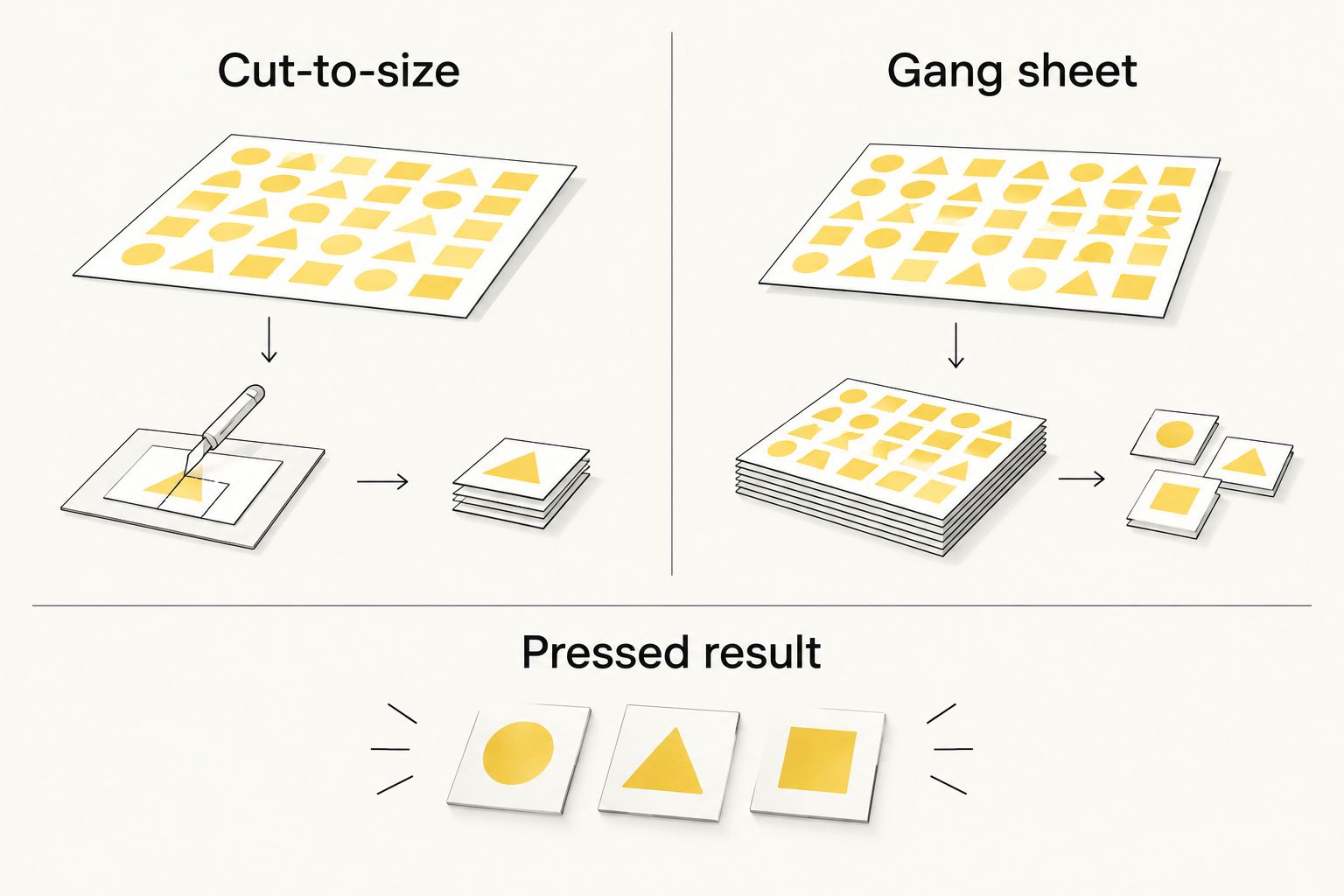
A sample or small evaluation order serves a specific purpose: it shows what your operator receives and what the finished application looks like. It cannot establish how every future design will perform. For color-critical jobs, use the actual artwork that needs approval rather than a graphic with unrelated colors.


Why people switch from Mad Monkey Transfers
The reason to compare Mad Monkey Transfers alternatives in 2026 is a specific production requirement, not an assumed fault with Mad Monkey Transfers. Switch only when another route answers a requirement your current order does not: individual cut-to-size pieces, a workable gang-sheet layout, or direct control of printing inside your shop.
Write down the requirement before requesting another supplier's output. If it is press-side handling, compare how the pieces arrive. If it is artwork layout, compare the submission formats. If it is color approval, compare pressed samples against the same approved reference. Those tests produce a usable decision without relying on claims about a competitor's unverified catalog or performance.
When staying with Mad Monkey Transfers is the right call
Keep Mad Monkey Transfers if its current transfers pass your artwork and pressed-garment checks, and its ordering format fits your operators. A supplier change that solves no documented production issue adds another approval step without answering a shop need.
For a new job in 2026, confirm current specifications with Mad Monkey Transfers just as you would with DTF2GO. The supplier that meets the approved job specification wins; the familiar name alone does not.
FAQ
What is the best Mad Monkey Transfers alternative in 2026?
DTF2GO is the best direct alternative here for shops seeking custom cut-to-size, ready-to-press DTF transfers. Compare a pressed sample using your approved artwork before moving a production job.
Is DTF2GO better than Mad Monkey Transfers for cut-to-size transfers?
DTF2GO explicitly offers cut-to-size DTF transfers. Confirm Mad Monkey Transfers' current format and compare what each supplier delivers for the same artwork before deciding which better fits your press workflow.
Does DTF2GO offer gang sheets as well as individual transfers?
Yes. DTF2GO lists both a print-ready DTF gang sheet and individual cut-to-size DTF transfers, giving decorators two submission formats to evaluate.
Should a print shop bring DTF printing in-house instead of switching suppliers?
Bring DTF printing in-house when direct control of transfer production is the goal. If you only need a different ready-to-press format, compare finished transfers before changing the production model.
Is screen printing a direct replacement for DTF transfers?
No. Screen printing changes the decoration method, while switching DTF suppliers changes who produces the transfers. Consider screen printing separately when the job does not require DTF output.
What should I check in a DTF transfer sample?
Check the pressed transfer against the approved artwork on the intended garment. Inspect placement, edge detail, color, and feel using the supplier's current application instructions.
When should I stay with Mad Monkey Transfers?
Stay with Mad Monkey Transfers when its current output passes your job checks and its ordering format works for your shop. Switch only for a defined production requirement another option meets better.
One last thing
Do not compare a loose transfer from one supplier with a finished shirt from another. Press both candidates on the intended garment and judge the same approved artwork. That single change makes a 2026 supplier decision about the result your customer receives.


