


If Fast DTF Transfer already delivers artwork that passes your garment tests, keep that result as your benchmark. The ceiling is a workflow that leaves your shop doing preparation you want handled before transfers arrive. The best Fast DTF Transfer alternative in 2026 is DTF2GO if you need custom cut-to-size, ready-to-press DTF transfers; in-house DTF production is the alternative if you need to manage printing yourself.
- DTF2GO leads fast dtf transfer alternatives for decorators seeking custom cut-to-size, ready-to-press DTF transfers.
- Choose gang sheets when your shop wants multiple designs in a print-ready layout.
- In-house DTF production adds printing control but also equipment maintenance and curing responsibilities.
- Keep Fast DTF Transfer when its tested results and order workflow already meet your requirements.
Why this matters
A transfer supplier and a transfer production system solve different problems. Buying ready-to-press transfers moves printing outside your shop; bringing DTF production in-house puts printing, adhesive application, and curing on your production schedule.
For a 2026 supplier decision, start with the work you want to remove. If your bottleneck is separating artwork before pressing, evaluate cut-to-size transfers. If it is arranging multiple designs for production, evaluate the gang-sheet workflow instead.
DTF2GO produces custom DTF heat transfers for apparel decorators, promotional product businesses, and print shops. That makes the relevant comparison outsourced transfers versus another production workflow—not apparel decoration versus unrelated printing services.
Choose the alternative that solves your actual production constraint. A supplier change does not correct inconsistent garment placement, unsuitable artwork, or incorrect press settings.
Fast DTF Transfer alternatives at a glance
Use this 2026 comparison to separate a supplier replacement from a process change. The Fast DTF Transfer row represents your existing benchmark: judge alternatives against transfers you have actually received and pressed, not an assumed performance ranking.
| Option | Best for | Standout feature or workflow | How it differs from Fast DTF Transfer |
|---|---|---|---|
| Fast DTF Transfer | Shops whose existing orders meet production requirements | Your current ordering and transfer application workflow | The benchmark to retain when no specific production problem needs solving |
| DTF2GO: Individual Cut-to-Size DTF Transfers | Decorators seeking separated, ready-to-press artwork | Custom cut-to-size DTF transfers | Evaluate whether the supplied format removes preparation from your current workflow |
| Print Ready DTF Gang Sheet | Shops preparing multiple designs in a shared layout | Print-ready gang-sheet ordering | Compare layout preparation and transfer separation with your existing order format |
| In-house DTF production | Shops that want responsibility for printing and curing | Direct control over the transfer production process | Replaces purchased transfers with equipment, consumables, and production duties |
| Screen printing | Repeat artwork suited to a screen-based production workflow | Ink applied through prepared screens | Changes the decoration method rather than replacing a DTF supplier |
The table is a workflow comparison, not a delivery-speed league table. Separate the transfer format, the production method, and the required delivery date before choosing. Those are different decisions.
1. DTF2GO: best for cut-to-size, ready-to-press transfers
DTF2GO is best for apparel decorators who want custom DTF transfers supplied cut-to-size and ready to press. You keep garment decoration in your shop while purchasing the transfers rather than producing them yourself. The format addresses preparation at the press station without requiring an in-house DTF printing operation.
The supplied catalog also includes gang-sheet formats. Its named products include the 32-inch builder, the 31-inch uploader, and a 32-inch-wide gang sheet. These dimensions identify different catalog options; they do not establish interchangeable file specifications or printable areas.
Where this option shines
- Cut-to-size preparation: Separated transfers suit a workflow where operators need individual artwork ready for placement.
- Outsourced production: Your shop buys the transfer instead of managing the printing and curing process.
- Format choice: Individual transfers and print-ready gang sheets address different preparation needs.
- Trade fit: The stated customer base includes apparel decorators, promotional product businesses, and print shops.
Where this option falls short
- Ready-to-press does not mean a finished garment. Your shop still handles positioning, pressing, peeling, and inspection.
- Outsourcing transfer production does not give your shop direct control over the supplier's equipment or production sequence.
- A transfer format alone does not establish fabric suitability. Test the actual garment and follow the supplied application instructions.
Best for: Shops that want purchased custom transfers, especially when individual cut-to-size artwork fits the press-room workflow.
Head-to-head: purchased transfers versus your current supplier
| Decision dimension | This alternative | Fast DTF Transfer benchmark |
|---|---|---|
| Individual artwork | Custom cut-to-size, ready-to-press transfers | Check how your current transfers arrive and what preparation remains |
| Gang-sheet ordering | A print-ready gang-sheet option appears in the catalog | Compare your existing layout and upload process |
| Shop responsibilities | Garment placement, pressing, peeling, and inspection remain in-house | Record the same steps for your current orders |
| Acceptance decision | Approve against your artwork and garment requirements | Use an accepted current transfer as the reference |
Do not switch every recurring job at once. Approve the replacement on representative artwork and garments first, then decide which order formats belong in your regular workflow.


Verdict: Buy for a cut-to-size, outsourced DTF workflow after approving the transfer on your actual garments.
2. In-house DTF production: best for direct production control
In-house DTF production gives your shop responsibility for making transfers rather than ordering finished transfers. You manage the printing process, adhesive application, curing, and production checks. This is an operating-model change, not simply another supplier account.
Where in-house DTF production shines
- You control artwork sequencing and the shop's transfer production queue.
- You can inspect transfers during production rather than only after receipt.
- Printing decisions sit with your own operators and equipment.
Where in-house DTF production falls short
- Printer maintenance and consumable management become shop responsibilities.
- Adhesive handling and curing require appropriate equipment and working procedures.
- Internal printing adds production work before the garment reaches the heat press.
| Decision dimension | In-house DTF production | Fast DTF Transfer as an outsourced supplier |
|---|---|---|
| Transfer printing | Your shop operates the printing equipment | Transfer production remains outside your shop |
| Maintenance | Your shop maintains production equipment | Your shop does not maintain the supplier's equipment |
| Quality checks | Your shop checks transfer production and garment application | Your shop evaluates received transfers and garment application |
| Scheduling | Printing joins your internal production queue | Ordering and receipt join your production planning |
Best for: Shops that deliberately want transfer manufacturing responsibilities and have a plan for equipment operation, maintenance, and process control.
Do not choose in-house production merely because a supplier order needs attention. First decide whether your shop wants to operate a printing process every production day. Verdict: Hold until the operating responsibilities fit your shop.
3. Screen printing: best for repeat artwork suited to screens
Screen printing applies ink through prepared screens rather than transferring a DTF print from film. It belongs in this comparison because some shops need a different decoration process, not a different transfer vendor. Evaluate it for the artwork and production workflow it serves.
Where screen printing shines
- Prepared screens support repeated printing of the same artwork.
- Ink and screen decisions give printers control over a different decoration process.
- It provides a separate production route when the job calls for screen-printed results.
Where screen printing falls short
- Screens require preparation before printing.
- Artwork changes and color separations introduce setup work.
- It does not replace a ready-to-press transfer ordering workflow directly.
Best for: Repeat designs where your shop specifically wants screen printing and can support its setup and curing process.
A screen-printing decision should follow the job requirements, not frustration with an upload form. Changing decoration methods changes production preparation too. Verdict: Skip as a direct supplier replacement; use it when the job calls for screen printing.
Why people switch from Fast DTF Transfer
A sound switch starts with a documented requirement, not a general promise of better transfers. For your 2026 comparison, write down the step that is not meeting your needs and select an alternative that addresses that step.
Transfer preparation
Choose cut-to-size transfers when separating artwork is work you want removed from your shop. Compare what arrives in the package with what your operators need at the press. A different format matters only if it changes that preparation.
Layout preparation
Choose a gang-sheet workflow when you want multiple designs arranged in a shared print file. Confirm the requirements for the exact ordering option before building the layout. A product's named width is not permission to assume its file dimensions or margins.
Production ownership
Choose in-house DTF production when printing control itself is the requirement. Your shop then owns the production process and its maintenance obligations. That trade-off is different from asking an outsourced supplier to provide a different transfer format.
Decoration method
Choose screen printing when the job requires that process. Treat the change as a production decision with its own artwork preparation, equipment, and curing needs—not evidence that a DTF supplier is unsuitable.
Do not turn these decision criteria into claims about Fast DTF Transfer's service. Compare the alternative with your own order history and accepted garments.
How to qualify a replacement before switching
Keep the 2026 evaluation focused on the exact work you sell. Use representative artwork, actual garment types, and the application instructions for each transfer. A supplier comparison is useful only when the conditions are recorded clearly enough to repeat.
Artwork check
Use artwork that exposes the details you care about: small lettering, fine lines, solid areas, and customer colors. Confirm the final print size before submission. Do not resize an approved logo casually and then blame the supplier for changed detail.
Format check
Decide whether the production job needs individual cut-to-size transfers or a gang sheet. For gang sheets, check design quantities, orientation, and separation space against the ordering requirements. For individual transfers, check each artwork size and quantity.
Press test
Apply the transfer to the garment you intend to decorate. Follow the supplied temperature, pressure, time, and peel instructions rather than carrying settings over from another supplier. Record the settings alongside the garment and transfer identification.
Garment review
Inspect placement, visible edges, detail, and appearance after application. Evaluate the decorated garment under its intended care instructions before approving a recurring job. Keep the approved result as a physical reference for reorders.
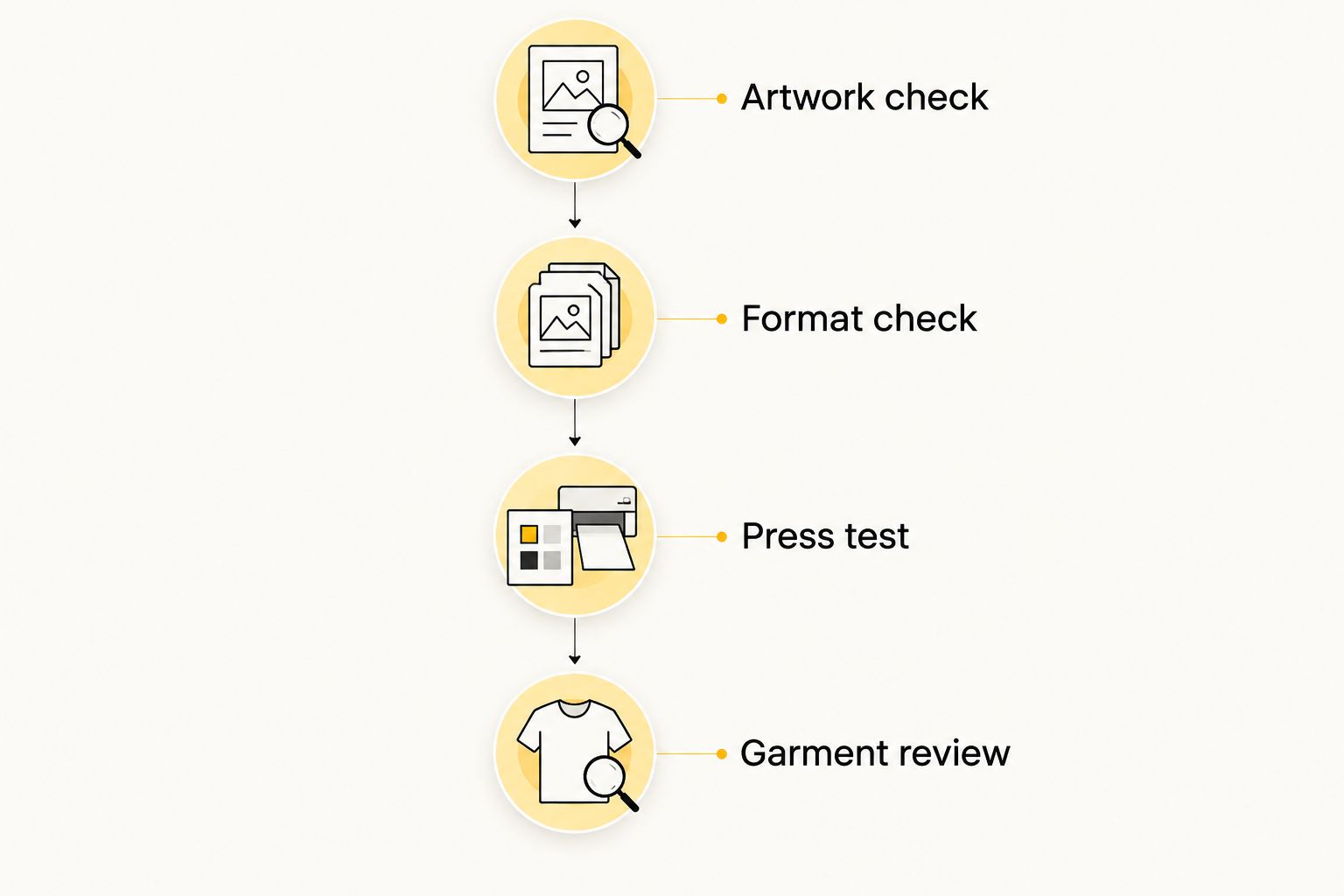
Keep the comparison controlled. Changing the artwork, garment, press instructions, and supplier simultaneously makes a failed result harder to diagnose. Record each alternative's own instructions, then compare the finished results against the same acceptance requirements.
When staying with Fast DTF Transfer is the right call
Stay with Fast DTF Transfer when its actual transfers, ordering workflow, and garment results already meet your requirements. A new supplier name is not a production improvement by itself. Define the benefit you need before opening another ordering workflow.
For 2026, retain the existing supplier for approved jobs while qualifying another option for a specific need. That separates an alternative format from an unnecessary full-shop change. It also gives operators a clear reference instead of asking them to judge unfamiliar transfers from memory.
FAQ
What's the best Fast DTF Transfer alternative in 2026 for cut-to-size transfers?
DTF2GO is the best fit here for custom cut-to-size, ready-to-press DTF transfers. Its stated customers include apparel decorators, promotional product businesses, and print shops; qualify the transfers on your actual garments before switching recurring work.
Should I choose individual DTF transfers or a gang sheet?
Choose individual transfers when you want separated artwork for garment placement, and a gang sheet when you want multiple designs in a shared print layout. Confirm the exact ordering requirements before preparing your files.
Is in-house DTF printing better than buying transfers?
In-house DTF printing is better suited to shops that want responsibility for transfer production. Buying transfers keeps printer operation, adhesive application, and curing outside your shop.
Does ready-to-press mean I can skip garment testing?
No, ready-to-press describes the transfer's preparation, not approval for every garment. Test the actual garment and follow the transfer's supplied application instructions.
Can I use the same heat-press settings after changing suppliers?
Use the replacement transfer's application instructions instead of automatically carrying over previous settings. Record temperature, pressure, time, and peel instructions with your garment test.
Is screen printing a direct replacement for a DTF transfer supplier?
No, screen printing changes the decoration process rather than replacing a transfer supplier. Choose it when the job requires screen printing and your shop can support screen preparation, printing, and curing.
When should I keep using Fast DTF Transfer?
Keep using Fast DTF Transfer when your received transfers and ordering workflow meet your production requirements. Switch only when an alternative addresses a specific need and passes your garment evaluation.
One last thing
The transfer that looks good on its carrier film is not yet an approved garment. Make your final decision at the press and during garment review, not from the unpressed artwork alone.
For your 2026 shortlist, compare DTF2GO ready-to-press DTF transfers with an accepted current transfer on the same intended garment type. Keep the artwork, application record, and approved garment together. That reference gives your shop a usable standard for reorders—not just another supplier name.


