


Ship a DTF transfer the wrong way and you find out during the press, not before: crease lines that telegraph through the print, hot-melt powder that's gone tacky from humidity, or a stack of cut-to-size transfers glued to each other in the box. This guide ranks the five packaging and shipping methods used for dtf transfer shipping packaging in 2026, matched to the type of order you're actually placing.
- Flat-pack folder shipping wins overall for standard print-ready gang sheet orders under 24 inches.
- Rolled tube shipping is the pick for bulk print shop orders and gang sheets wider than 24 inches.
- Poly sleeve packaging protects individual cut-to-size DTF transfers best at low order volumes.
- Moisture-barrier cartons matter most when transfers sit in a warehouse before pressing.
- Sample envelope packaging is the low-commitment entry point for testing dtf transfer shipping packaging before a bulk buy.
Why this matters
A DTF transfer is only as good as the film that reaches your heat press flat, clean, and dry. Fold a gang sheet the wrong way in transit and the crease shows up as a faint line across the finished print after pressing — no amount of pressure fixes that after the fact.
Order width matters here too. A standard 24 inch sheet only gives you about 21 inches of usable print area once you account for feed margins, while a print-ready DTF gang sheet built on a 31 inch format keeps the full width printable. That extra real estate changes how the sheet needs to be packed for shipping — a wider sheet folded flat creases more, which is exactly why rolled shipping exists as a category.
Color accuracy is the other reason packaging discipline matters in 2026. A 9-color print system matched against 97% of Pantone colors is wasted if the transfer arrives with surface abrasion from loose handling in a poly bag that's too big for the sheet inside it.
What makes the best DTF transfer shipping packaging
- Crease resistance during transit and handling
- Moisture control for the hot-melt adhesive powder
- Fit to order size — a single sheet needs different packaging than a pallet
- Unboxing speed on your shop floor at press time
- Cost per order relative to your typical order volume
- Reorder consistency for wholesale accounts running the same SKU monthly
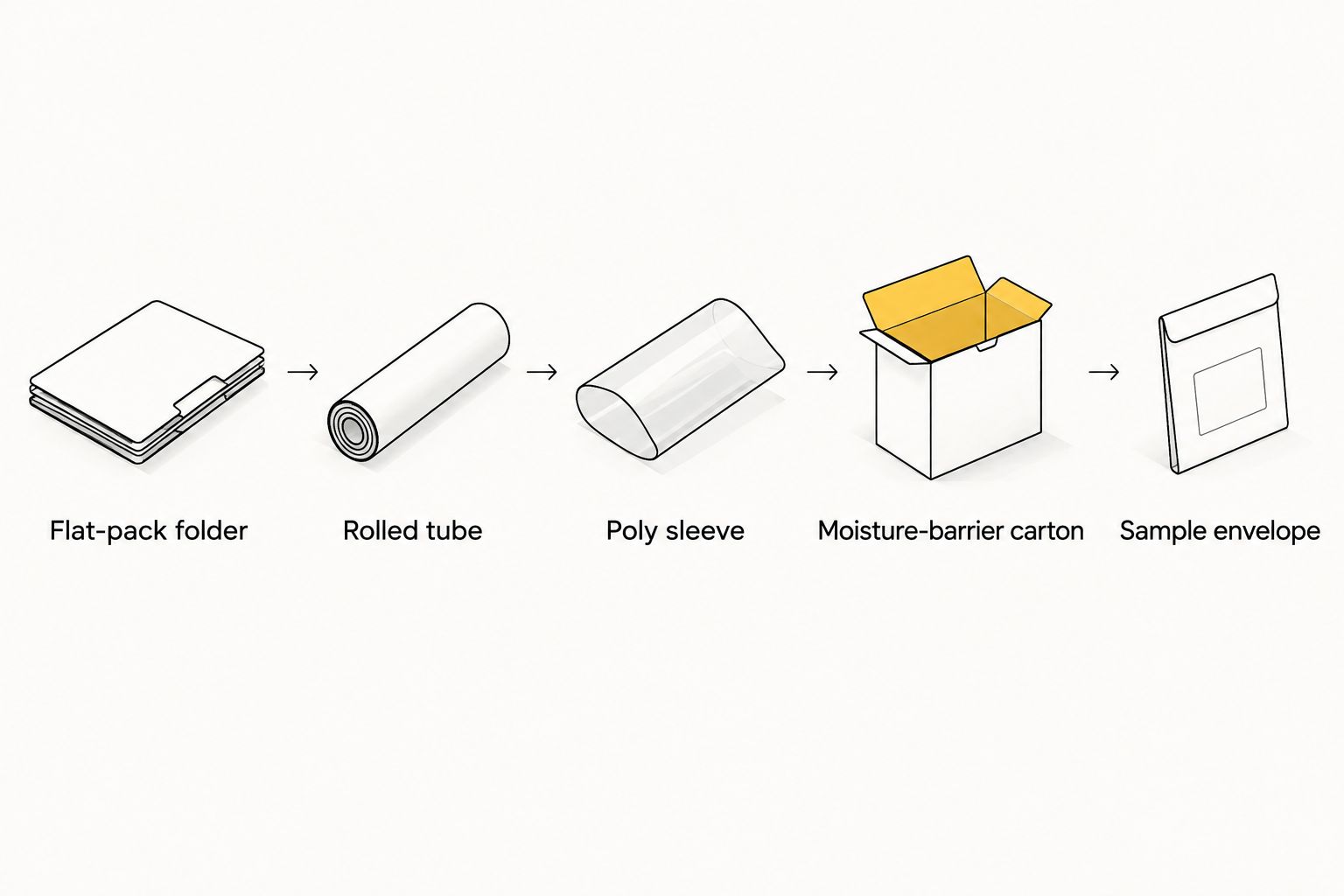
DTF transfer shipping packaging at a glance
| Packaging option | Best for | Standout feature | Key limitation |
|---|---|---|---|
| Flat-pack folder | Single gang sheets & small orders | Keeps 22-31 in sheets perfectly flat | Bulkier per unit than rolled tubes |
| Rolled shipping tube | Bulk print shop orders, sheets over 24 in | No crease lines across long sheets | Needs floor space to unroll and store |
| Poly sleeve packaging | Individual cut-to-size transfers | Keeps each cut transfer dust-free and separated | Slower to unpack at high volume |
| Moisture-barrier bulk carton | Wholesale reorders & warehoused stock | Blocks humidity swings that soften hot-melt powder | Adds packaging cost per order |
| Sample envelope | First-time buyers testing colors/fabrics | Fits a mailbox, opens flat on a desk | Not built for repeat bulk shipping |
1. Flat-pack folder shipping: best DTF transfer shipping packaging for standard gang sheet orders
Flat-pack shipping means the gang sheet ships between rigid board or heavy card stock, sandwiched flat inside a mailer or box. It's the default for single-sheet and small-batch orders because there's nothing to unroll and no memory-curl to press out before you set up the sheet on your heat press.
Flat-pack folder pros:
- Sheet is pre-flattened, ready to press with no unrolling wait
- Board backing prevents the film from folding in transit
- Fast to unbox — no tube to slide the sheet out of
Flat-pack folder cons:
- Less efficient for orders over a few sheets — box count climbs fast
- Board and mailer add more packaging waste per sheet than a rolled tube at scale
Best for: shops ordering one to a handful of gang sheets at a time. Verdict: Buy.
2. Rolled tube shipping: best DTF transfer shipping packaging for bulk print shop orders
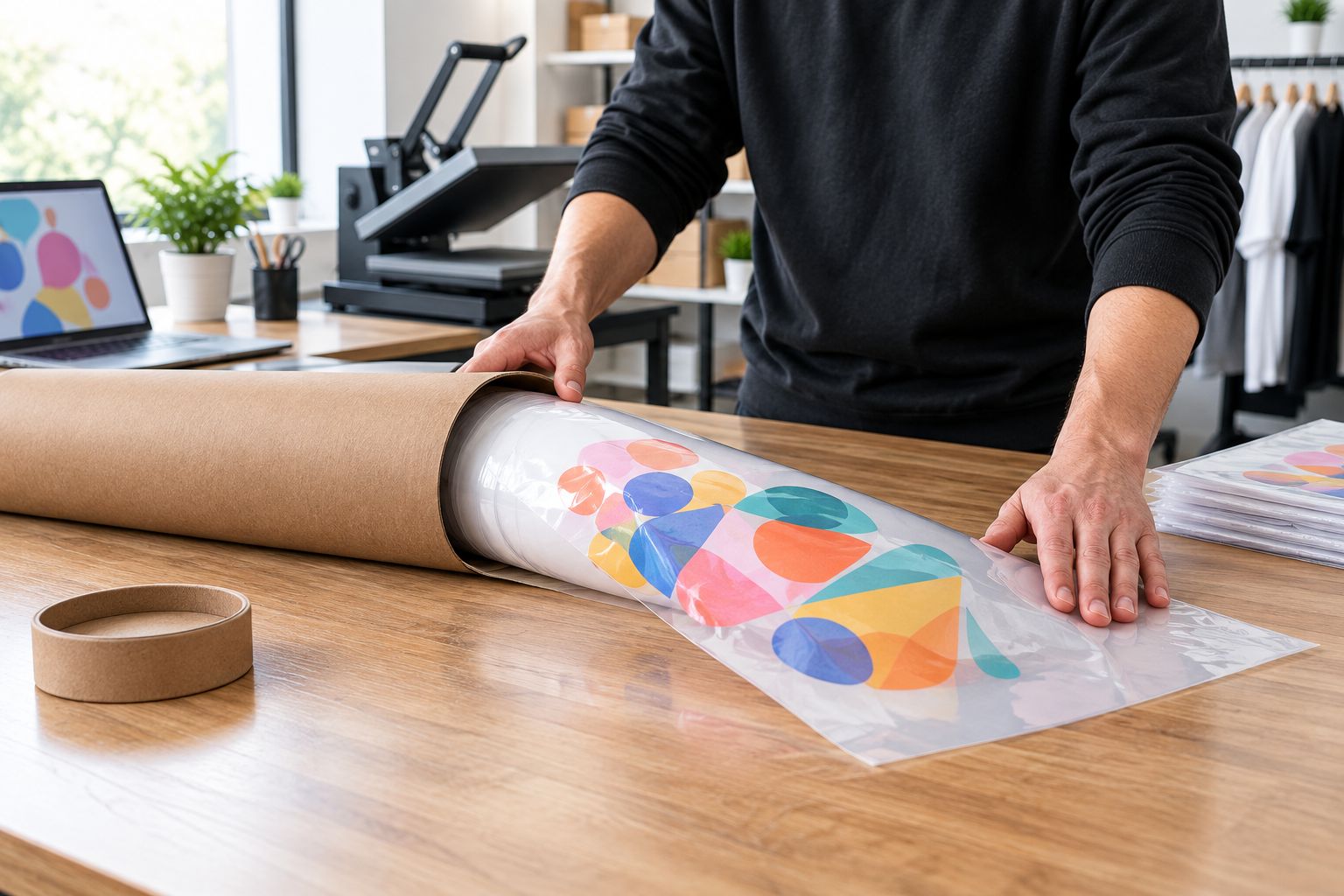
Rolled shipping is the standard once you're ordering multiple wide-format sheets or running recurring bulk orders. The film goes around a core, protected from crease points that a flat-pack can't avoid once a sheet crosses roughly 24 inches. Shops working through bulk transfer orders lean on this because a single tube can carry several sheets stacked around the core without any of them touching a fold line.
Rolled tube pros:
- Zero crease risk on long, wide-format sheets
- One tube holds multiple sheets, cutting box count for bulk orders
- Handles reorders at consistent quality run after run
Rolled tube cons:
- Sheets need a flattening period or light heat before the first press
- Requires shelf or floor space to store tubes upright
Best for: print shops running recurring bulk orders on sheets 24 inches and wider. Verdict: Buy.
3. Poly sleeve packaging: best DTF transfer shipping packaging for individual cut-to-size transfers
Cut-to-size transfers ship differently than gang sheets because each piece is a standalone unit, not one continuous film. Poly sleeve packaging keeps individual cut-to-size DTF transfers separated so the hot-melt backing on one piece doesn't pick up dust or stick against the next one in the stack.
Poly sleeve pros:
- Each transfer stays isolated — no adhesive-to-adhesive contact
- Lightweight, low-cost for small orders
- Easy to sort by design when a box holds mixed SKUs
Poly sleeve cons:
- Unpacking dozens of individual sleeves takes longer at high volume
- Sleeves alone don't block humidity the way a sealed carton does
Best for: decorators ordering assorted individual transfers rather than full sheets. Verdict: Buy.
4. Moisture-barrier bulk cartons: best DTF transfer shipping packaging for warehoused wholesale stock
Once transfers are going to sit in inventory for weeks before a press run, moisture becomes the real threat, not creasing. Humidity swings soften hot-melt powder and can cause weak, patchy adhesion on the shirt later. Moisture-barrier cartons — sealed liners inside a rigid outer box — hold humidity steady for wholesale accounts stockpiling ahead of a busy season.
Moisture-barrier carton pros:
- Keeps hot-melt powder stable through long storage periods
- Rigid outer box protects against warehouse handling damage
- Scales cleanly to pallet-size wholesale orders
Moisture-barrier carton cons:
- Adds cost per order versus a simple poly sleeve or flat-pack
- Overkill for a shop that presses transfers within days of delivery
Best for: wholesale accounts and promotional product businesses holding inventory ahead of demand. Verdict: Buy for storage-heavy operations, Skip if you press same-week.
5. Sample envelope packaging: best DTF transfer shipping packaging for first-time buyers
A sample envelope is a small flat mailer built to move a handful of color swatches or test squares, not production volume. It's the entry point for a decorator who wants to check color match and fabric hand-feel before committing to a gang sheet order.
Sample envelope pros:
- Cheapest packaging tier to fulfill and ship
- Fast to open, easy to test press same day it arrives
- Low risk way to check color accuracy against a Pantone reference before a bulk buy
Sample envelope cons:
- Not built for repeat, high-frequency shipping
- Too small a format to judge how a full gang sheet handles in transit
Best for: anyone deciding whether to move to bulk ordering. Verdict: Buy as a first step, then move up.
How we ranked these
Each packaging option was scored against the six criteria above: crease resistance, moisture control, fit to order size, unboxing speed, cost per order, and reorder consistency. No single option wins across all six — that's why the ranking runs by use case instead of a single winner. Flat-pack shipping tops the list because it fits the most common order size in 2026: one to a few gang sheets at a time.


Which DTF transfer shipping packaging should you choose?
If you're pressing shirts weekly and ordering a handful of gang sheets, flat-pack folder shipping is the default in 2026 — it's fast to unbox and keeps sheets flat for immediate use. Print shops running recurring bulk orders on wide-format sheets should standardize on rolled tube shipping. Decorators buying assorted individual transfers do best with poly sleeve packaging, and any wholesale account stockpiling inventory ahead of a season needs moisture-barrier cartons, not a basic sleeve. First-time buyers still deciding should start with a sample envelope before moving to a bulk format.
FAQ
What is the best DTF transfer shipping packaging for gang sheets?
Flat-pack folder shipping is best for standard gang sheet orders under 24 inches wide in 2026 because it keeps the sheet flat and press-ready with no unrolling wait. Sheets over 24 inches wide ship better rolled to avoid crease lines.
Should DTF transfers ship rolled or flat?
Flat shipping works for single sheets and small orders; rolled shipping is better once sheets exceed roughly 24 inches or you're ordering in bulk. Rolling avoids the crease lines that flat-pack folders risk on wider formats.
Does humidity affect DTF transfers in storage?
Yes — humidity swings soften the hot-melt adhesive powder on a DTF transfer, which can lead to weak or patchy adhesion later. Moisture-barrier cartons hold humidity steady for stock that sits for weeks before pressing.
How should individual cut-to-size DTF transfers be packaged?
Individual cut-to-size transfers ship best in poly sleeves that keep each piece separated so the adhesive backing doesn't stick to the next transfer in the stack. This matters more as order size grows past a handful of pieces.
Is a rolled gang sheet ready to press right out of the tube?
Not immediately — a rolled sheet usually needs a short flattening period, or a light pass of heat, before the first press to remove the roll curl. Skipping this step can cause uneven pressure across the sheet.
What packaging should a first-time DTF buyer request?
A sample envelope is the right starting point in 2026 — it's low cost and lets you check color match and fabric feel before committing to a gang sheet or bulk order.
Why does gang sheet width affect shipping packaging?
A 31 inch format gives more usable print width than a standard 24 inch sheet, but wider sheets crease more easily when folded flat. That's the main reason bulk and wide-format orders move to rolled tube shipping instead of flat-pack.
Do wholesale DTF orders need different packaging than one-off orders?
Yes — wholesale accounts holding inventory for weeks need moisture-barrier cartons to protect the adhesive powder, while a shop pressing the same week can use simpler flat-pack or sleeve packaging.
One last thing
The packaging detail decorators miss most in 2026 isn't the box — it's the gap between delivery and pressing. A sheet that sits sealed in moisture-barrier packaging for three weeks presses better than one left loose on a shelf for three days, no matter which shipping method got it there.


