


UV DTF is not automatically more expensive than standard DTF; compare matched quotes and the total work required to produce an acceptable finished item. Transfer-only comparisons leave out application labor, equipment, testing, and rejected blanks. For your 2026 purchasing decisions, choose the process that fits the substrate before comparing costs.
- Is UV DTF more expensive than standard DTF? There is no universal premium across different jobs and substrates.
- Standard DTF is best for compatible apparel; UV DTF is best for compatible smooth, rigid surfaces.
- Compare finished-item cost, not unmatched sheet totals or equipment lists.
- DTF2GO supplies ready-to-press DTF transfers for apparel decorators, promotional product businesses, and print shops.
Is UV DTF printing more expensive than standard DTF?
Neither process is the universal lower-cost choice. UV DTF and standard DTF use different materials and application methods, so an unmatched quote does not establish which process is more economical for your work.
Standard DTF transfers a printed design to compatible fabric using heat and pressure. UV DTF uses UV-cured graphics and an adhesive transfer system for compatible hard surfaces. The shared name does not make the finished applications interchangeable.
| Comparison point | Standard DTF | UV DTF |
|---|---|---|
| Best for | Compatible apparel and textile decoration | Compatible smooth, rigid surfaces |
| Application method | Heat and pressure following transfer instructions | Adhesive transfer following supplier instructions |
| Main production advantage | Fits a heat-press apparel workflow | Decorates suitable hard goods without an apparel heat-press step |
| Main limitation | Fabric and heat tolerance require verification | Surface coating, texture, and shape require verification |
| Work to include | Layout, cutting if needed, positioning, pressing, and inspection | Surface preparation, positioning, transfer application, and inspection |
| Valid cost comparison | Same artwork, dimensions, quantity, and acceptance requirements | Same artwork, dimensions, quantity, and acceptance requirements |
If your starting point is apparel production, map the blank-apparel-to-finished-merch workflow before comparing transfer formats. It keeps the purchasing decision tied to the work you actually perform.
Why this matters
A print shop does not sell a transfer in isolation when the customer orders finished merchandise. You sell an accepted decorated item, with the handling and quality checks needed to deliver it.
A sheet comparison ignores that distinction. A transfer that fits your production method still needs correct application; a transfer intended for a different substrate is not a substitute simply because its quote looks attractive.
For a 2026 production plan, separate apparel orders from hard-goods orders. Then compare suitable suppliers or formats within each category, rather than treating UV DTF as an upgraded version of garment DTF.
Standard DTF: best for compatible apparel
Choose standard DTF for apparel jobs that meet the transfer supplier's fabric and application requirements. Ready-to-press transfers let your shop handle garment decoration without printing the transfer itself.
That division of work matters. Buying completed transfers and producing transfers in-house are different operating models, even when both end with the same heat-press application.
Standard DTF's advantage is its fit with a garment-decoration workflow. Its limitation is that heat, pressure, fabric construction, and the transfer system must work together; the process name alone does not approve every garment.
Include these tasks in your apparel estimate:
- Check the artwork at its intended finished size.
- Prepare and position the garment on the press.
- Apply the transfer using the supplied instructions.
- Follow the specified peel and finishing procedure.
- Inspect placement, edges, and the decorated fabric.
Do not apply a generic temperature or dwell time to every transfer. Use the instructions for the actual transfer and garment combination, and test before committing the order.
UV DTF: best for compatible smooth, rigid surfaces
Choose UV DTF for hard-goods decoration when the transfer is approved for the actual surface. Typical applications include compatible glass, metal, and rigid plastic surfaces, but coatings and surface treatments still require testing.
UV DTF's application advantage is that it does not use the garment heat-press step. That does not remove preparation, alignment, carrier handling, or inspection from the job.
The limitation is surface dependence. A material name such as plastic or metal does not describe its coating, texture, contamination, or shape, all of which matter when you assess an adhesive application.
A smooth, accessible surface and a curved item also present different positioning problems. Check the artwork against the usable decoration area rather than assuming the full outside dimensions are printable.
For your 2026 hard-goods quotes, record the blank's exact finish and intended use. Do not infer dishwasher suitability, food-contact suitability, or outdoor service life from the term UV DTF.
Why the total production cost varies
The useful comparison is the work required to deliver the specified result. Review these factors before accepting either quote:
- Artwork dimensions and layout. Larger designs occupy more film. Sheet arrangement also determines how much of the purchased area becomes usable transfers.
- Order quantity and design mix. Repeated graphics, individual names, and mixed sizes require different layout and sorting work. Keep those requirements identical when requesting comparisons.
- Application labor. Include cutting when required, positioning, pressing or adhesive application, carrier removal, and inspection. Time the complete workflow rather than the central application step alone.
- Substrate and preparation. Fabric composition and heat tolerance matter for standard DTF. Surface cleanliness, coatings, texture, and geometry matter for UV DTF.
- Accepted output and rework. Include the transfers, blanks, and labor consumed by failed applications. Divide total job spending by accepted finished items, not transfers ordered.
- Production model. Buying finished transfers leaves transfer manufacturing with the supplier. In-house printing adds equipment, consumables, maintenance, and production responsibilities to your operation.
These factors explain why a transfer-only comparison is incomplete. They do not establish a fixed premium for either process, and they should not become assumed allowances without measurements from your shop.
How to compare quotes without mixing unlike jobs
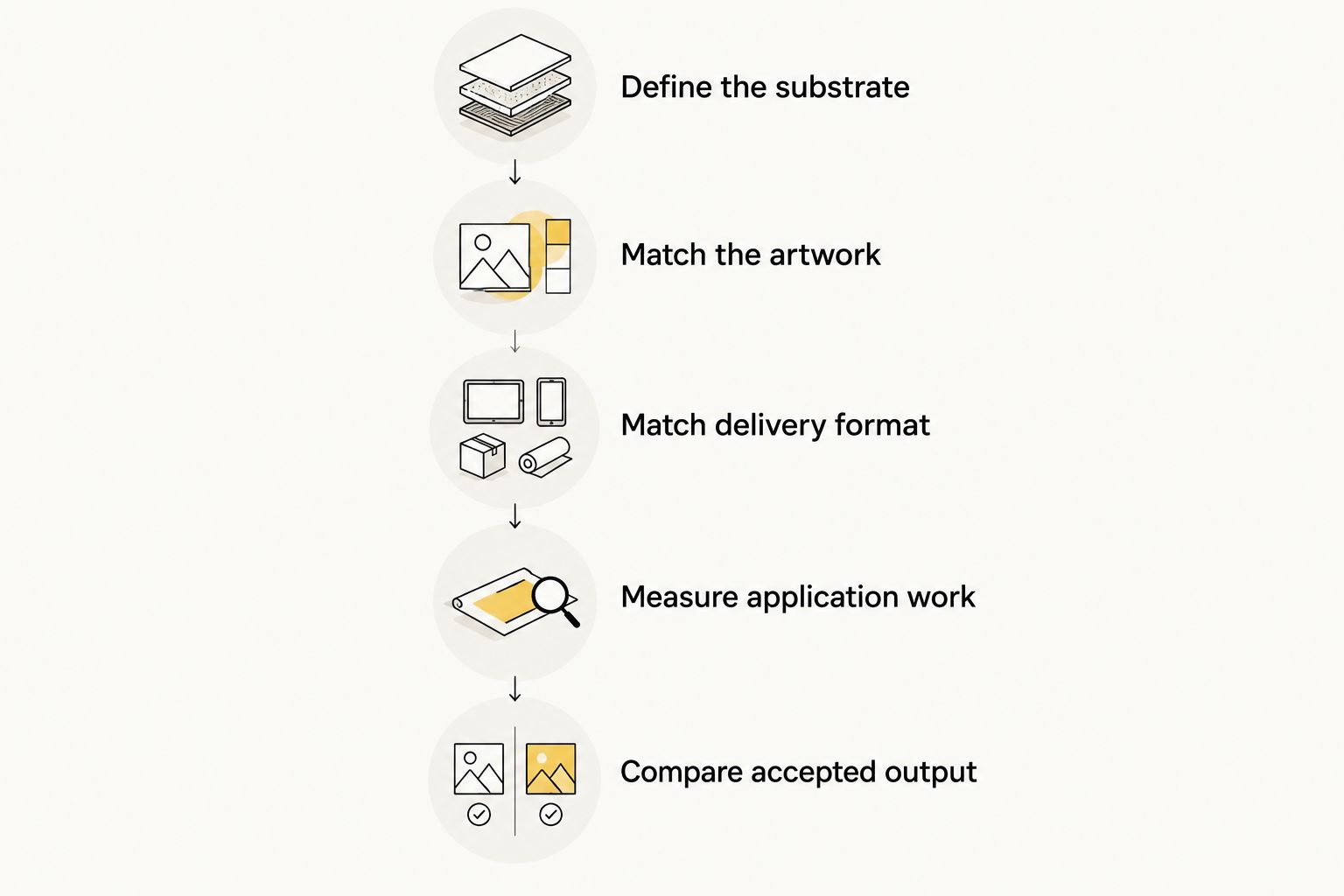
Use the following sequence for a 2026 quote review. Keep a written job specification beside each response so that differences in scope remain visible.
1. Define the substrate
Name the actual garment or hard good, including its material and finish. Ask whether the proposed transfer system suits that specific surface and the customer's intended use.
Do not request competing quotes for unspecified merchandise. The substrate determines which decoration methods deserve consideration in the first place.
2. Match the artwork
Specify identical finished dimensions, quantities, and design variations. Include any individual names or other personalization in both requests.
A quote for repeated logos and a quote for individually personalized graphics do not cover the same preparation work. Keep the comparison consistent before evaluating it.
3. Match the delivery format
Identify whether you are ordering completed transfers, a prepared gang sheet, or equipment for manufacturing transfers. Also establish who handles cutting and sorting.
Do not compare a ready-to-apply product with a production system as though both represent the same purchase. Put each option into its own operating model first.
4. Measure application work
Record preparation, positioning, application, carrier removal, and inspection on the intended blank. Include repeated handling that occurs between those steps.
Use the actual transfer instructions during the trial. A fast application that fails inspection does not represent usable production output.
5. Compare accepted output
Calculate total job spending divided by accepted finished items. Include blanks, transfers, attributable labor, and other job-specific expenses consistently on both sides.
Use cost per accepted finished item as the decision measure. It connects the quote to what your customer receives rather than what your shop initially purchases.
Buying transfers versus printing them in-house
Buying finished transfers and manufacturing transfers answer different business questions. The first concerns sourcing and application; the second also concerns operating a print-production process.
When you outsource, evaluate artwork preparation, delivered transfer format, receiving checks, application, and supplier instructions. Your shop still needs the equipment and skills required to decorate the blank correctly.
When you manufacture transfers, add the complete production workflow to the assessment. Standard DTF includes film printing, adhesive-powder application, and curing; UV DTF includes UV printing and the film-transfer preparation required by the system.
Follow the equipment manufacturer's requirements for operation, maintenance, ventilation, and material handling. Do not infer those requirements from another printer or another ink system.
For a 2026 equipment decision, keep separate records for work currently outsourced and work you intend to manufacture. An equipment purchase and an order of finished transfers are not competing line items. Compare the operating models over the same defined workload.
Where ready-to-press transfers fit
DTF2GO is best for apparel decorators, promotional product businesses, and print shops sourcing custom ready-to-press DTF transfers. That is a sourcing fit, not a claim that every transfer format suits every substrate.
For apparel work, DTF2GO offers individual cut-to-size DTF transfers. A cut-to-size format removes the task of separating individual designs from a larger sheet, but your shop still handles positioning, pressing, and inspection.
The trade-off is control of the workflow: purchasing completed transfers places transfer production with the supplier while leaving final application with your team. Test the actual garment and follow the supplied instructions before approving production.
Can I use standard DTF instead of UV DTF to save money?
Standard DTF is not a general substitute for UV DTF on hard goods. Standard apparel DTF and adhesive UV DTF have different bonding and application systems, so select a method approved for the intended substrate rather than substituting on the basis of a quote.
Does UV DTF eliminate application labor?
UV DTF does not eliminate application labor. Surface preparation, alignment, carrier handling, transfer application, and inspection remain part of the work even without a garment heat-press step.
Is a gang sheet always the better-value format?
A gang sheet is not automatically the better-value format for your job. Compare usable layout, cutting and sorting work, design quantities, and the output your shop accepts; sheet dimensions alone do not settle the decision.
FAQ
Is UV DTF more expensive than standard DTF for my print shop?
UV DTF is not automatically more expensive than standard DTF for your print shop. Match the substrate, artwork dimensions, quantity, application work, and acceptance requirements before comparing quotes.
Which is better for shirts, UV DTF or standard DTF?
Standard DTF is the appropriate starting point for compatible shirt decoration. Verify fabric suitability and use the transfer supplier's application instructions rather than treating UV DTF as an apparel upgrade.
Do I need a heat press to apply UV DTF transfers?
UV DTF adhesive transfers do not use the standard apparel heat-press application process. Follow the supplier's preparation, transfer, and handling instructions for the specific surface.
Does UV DTF work on every hard surface?
UV DTF is not automatically suitable for every hard surface. Verify the material, coating, texture, shape, and intended use with the supplier, then test the actual blank.
What should I include when comparing transfer quotes?
Include matching artwork dimensions, quantities, design variations, transfer format, and delivery requirements. Then add your preparation, application, inspection, and rejected-item costs to compare accepted finished output.
Does buying ready-to-press transfers mean I do not need application equipment?
Buying ready-to-press apparel transfers removes transfer manufacturing from your shop, not garment application. You still need suitable application equipment and must follow the supplied instructions.
Who are DTF2GO ready-to-press DTF transfers for?
DTF2GO ready-to-press DTF transfers are for apparel decorators, promotional product businesses, and print shops sourcing custom transfers. Your team remains responsible for verifying the blank and completing the application correctly.
One last thing
Ask for application instructions before approving the transfer order, not after it arrives. Those instructions reveal which preparation, equipment, handling, and verification steps belong in your estimate.
For your next 2026 job, attach the approved substrate specification and application procedure to the production ticket. A quote becomes useful only when the shop floor knows exactly what result it must deliver.


