


Best overall for an approved puffer-jacket job: DTF2GO cut-to-size DTF transfers. Best for initial evaluation: DTF Transfers Samples. Best for prepared production layouts: 31" DTF Gang Sheet UPLOADER. This 2026 guide ranks ordering formats for DTF transfers for puffer jackets; every recommendation depends on testing the exact shell, finish, and quilted construction first.
- DTF2GO cut-to-size DTF transfers are the default for decorators ordering custom artwork after puffer-jacket testing.
- DTF Transfers Samples support initial evaluation; they do not establish compatibility with every jacket shell.
- Choose DTF transfers for puffer jackets by shell compatibility, quilt-channel fit, and validated heat-press instructions.
- Use gang sheets for approved production layouts, not as a substitute for garment testing.
Why this matters
A puffer jacket is not a flat T-shirt. Its shell, surface treatment, insulation, and stitching all affect the decoration process, so a transfer that works on another garment does not establish suitability here.
The best transfer is one whose application requirements work with the exact jacket without damaging it. Start with the garment manufacturer's decoration guidance and the transfer supplier's application instructions. If those requirements conflict, stop before pressing customer stock.
“Puffer” describes an insulated garment construction; it does not specify nylon, polyester, a coating, or an adhesive requirement. Likewise, “puff DTF” describes a raised decoration effect, not a transfer automatically suited to puffer jackets.
What makes the best DTF transfers for puffer jackets
Use these criteria for your 2026 purchasing decision. Ordering convenience comes after garment compatibility, not before it.
- Shell compatibility: Identify the outer fabric and any finish. Ask about the actual jacket specification rather than requesting a transfer for “synthetics.”
- Application compatibility: Compare the transfer's required temperature, dwell, pressure, and peel method with the garment manufacturer's restrictions. Do not substitute a generic internet recipe.
- Quilt-channel fit: Choose artwork that fits a supportable decoration area. Raised seams and uneven loft complicate contact between the press and the transfer.
- Finished appearance: Inspect adhesion, shell gloss, color change, distortion, and the surrounding insulation after the garment cools.
- Production format: Choose individual transfers for separate designs or gang sheets for prepared layouts. Neither format establishes a different adhesive performance by itself.
Keep a physical approval sample with the job record. A photo documents placement and appearance, but it does not preserve the feel of the decorated panel.
Best options at a glance
These are ordering-format recommendations, not a claim that the products use different adhesives or carry puffer-specific approvals. Read each limitation before choosing your route.
| Rank and option | Best for | Standout feature | Key limitation |
|---|---|---|---|
| 1. PRINT & CUT DTF Transfers | Custom artwork after jacket approval | Individual cut-to-size format | Jacket compatibility still requires confirmation and testing |
| 2. DTF Transfers Samples | Initial material and application evaluation | Physical transfer samples | Sample artwork does not validate every production design |
| 3. 31" DTF Gang Sheet UPLOADER | Prepared production layouts | Upload route for print-ready gang sheets | Layout preparation and transfer separation remain part of the workflow |
1. PRINT & CUT DTF Transfers: best for approved custom artwork
PRINT & CUT DTF Transfers are the individual cut-to-size option for custom apparel decoration. This format suits a job where you have settled the artwork dimensions and want separate transfers rather than a combined production sheet.
DTF2GO cut-to-size DTF transfers are the default for decorators ordering custom artwork after puffer-jacket testing. The recommendation concerns the ordering format; it is not a blanket approval for coated nylon, polyester, or insulated outerwear.
PRINT & CUT DTF Transfers pros
- Individual transfers avoid separating each design from a larger gang sheet.
- Cut-to-size ordering keeps attention on the dimensions of each decoration.
- Separate transfers support sorting artwork by garment, placement, or customer job.
PRINT & CUT DTF Transfers cons
- The format does not establish compatibility with a particular shell treatment.
- A correctly sized transfer still needs an adequately supported pressing area.
Best for: Decorators with approved jacket artwork who prefer individual transfer handling.
Before ordering, measure the usable panel with the jacket relaxed. Check the smallest garment size in the order rather than assuming the same logo fits every size between the same seams.
Keep the production artwork consistent with the tested design. Changing from a compact logo to a large solid panel changes the decorated area and calls for another evaluation.
Verdict: Buy after the exact jacket and artwork pass application testing.
2. DTF Transfers Samples: best for initial evaluation
DTF Transfers Samples provide physical transfers for evaluation before you commit to a production approach. Use them to inspect the transfer and begin assessing its behavior on a sacrificial jacket with confirmed application guidance.
Start your 2026 outerwear qualification with the garment, not just the transfer. A successful press on cotton does not answer whether a water-repellent shell accepts the same application process.
DTF Transfers Samples pros
- Physical samples let you inspect a transfer before planning production.
- A test application exposes garment-specific appearance and adhesion problems.
- A retained sample gives your press operator a physical reference.
DTF Transfers Samples cons
- Sample artwork does not reproduce every production design's coverage or detail.
- Passing on one shell does not approve another jacket style, finish, or color.
Best for: Shops evaluating an unfamiliar jacket before preparing customer artwork for production.
Use 1 sacrificial jacket of the exact style and color as your initial test garment. If the order includes different shells or finishes, treat those as separate qualification decisions rather than extending the first result automatically.
Once the sample evaluation succeeds, test the actual customer artwork before releasing the run. The second step matters because a broad graphic and a small emblem do not occupy or flex across the same area.
Verdict: Buy for initial evaluation; hold production until the actual artwork is approved.
3. 31" DTF Gang Sheet UPLOADER: best for prepared layouts
The 31" DTF Gang Sheet UPLOADER is the print-ready gang-sheet route. Choose it when your artwork is already arranged for upload and your shop is prepared to separate and organize the transfers before pressing.
A 31-inch product format describes the ordering option, not a suitable jacket-logo width. Size every design to the usable garment panel before building the sheet.
31" DTF Gang Sheet UPLOADER pros
- A prepared sheet groups production artwork into a common layout.
- Multiple designs can remain organized within the same artwork file.
- Print-ready preparation lets your shop establish artwork sizes before submission.
31" DTF Gang Sheet UPLOADER cons
- Your shop must prepare the layout and separate the resulting transfers.
- Gang-sheet ordering does not resolve shell compatibility or uneven pressure.
Best for: Print shops with approved jacket applications and an established gang-sheet preparation workflow.
Do not fill a sheet before the placement test. If the approved logo needs resizing to avoid stitching, an entire prepared layout becomes the wrong production file.
Keep a separate job ticket identifying artwork, jacket style, placement, and approved application instructions. Sheet organization helps only when the press operator can match each transfer to the correct garment.
Verdict: Buy for validated repeat production; wait while placement or compatibility remains unresolved.
How to qualify a quilted puffer before production
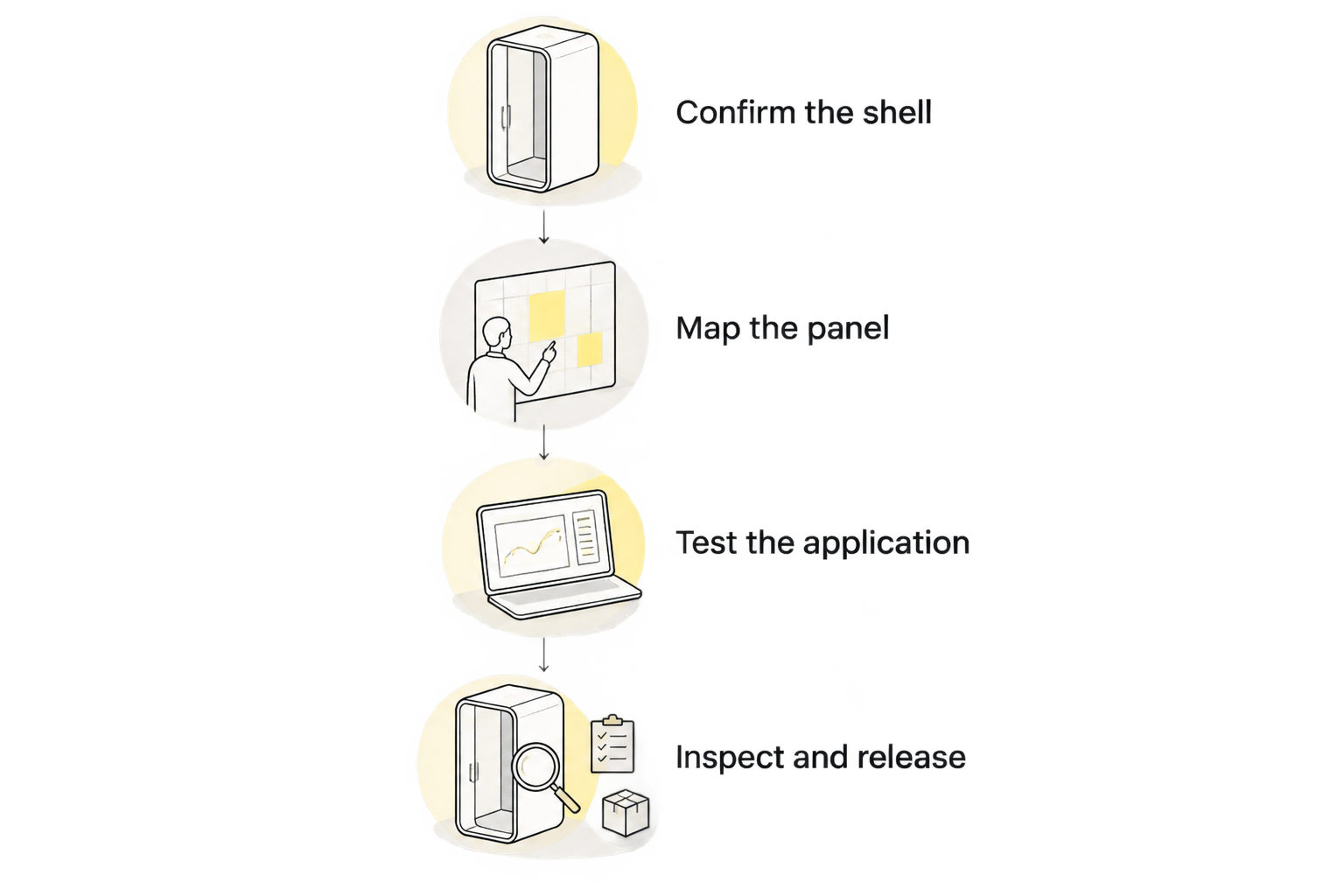
Use this sequence for each new jacket construction in your 2026 production program. Do not treat the first successful peel as the entire approval process.
Confirm the shell
Record the jacket manufacturer, style, color, outer fabric, and known finish. Ask the garment supplier whether heat-applied decoration is permitted and request any restrictions that apply to that style.
A fiber label alone does not describe every surface treatment. If a supplier cannot confirm the relevant construction or decoration guidance, do not replace that information with a guess.
Map the panel
Measure the usable area between seams with the jacket relaxed, then place a paper version of the artwork on the garment. Check zipper clearance, pocket access, stitching, and how the design looks when worn.
Start with a design contained within 1 quilt channel when the garment provides a suitable area. This is a placement recommendation, not a universal size limit; some jackets offer a separate unquilted decoration panel.
Test the application
Follow the transfer supplier's instructions only where they are compatible with the garment manufacturer's guidance. Use a press arrangement that supports the target area without trapping zippers, snaps, or bulky seams beneath the artwork.
Do not lower temperature, shorten dwell, or increase pressure by guesswork. A visibly clean press result does not establish that an altered application process formed an adequate bond.
Inspect and release
After cooling, examine the transfer edges, fine details, shell surface, and surrounding loft. Flex the garment naturally and follow the applicable care instructions during evaluation before approving production.
Record the approved artwork file, placement, press setup, and inspection result together. Repeat the evaluation when the jacket specification or application process changes; a matching product photo is not proof of matching construction.
Problems that should stop the job
Do not keep pressing a failing jacket while searching for a setting that looks acceptable. Separate the likely cause before using another customer garment.
- Lifting edges: Check the application instructions, shell treatment, and support beneath the artwork. More pressure is not a substitute for confirming compatibility.
- Gloss or press marks: Stop and review the garment's heat restrictions. Extra pressing exposes the shell to more heat rather than reversing damage.
- Visible color shift: Investigate heat sensitivity and possible dye migration, particularly on dyed polyester shells. Do not promise color stability from an immediate visual check alone.
- Distorted quilting: Reassess placement and garment support. Reject a result that damages the surrounding jacket even when the transfer itself adheres.
Avoid UV-DTF as a substitute for an apparel heat-transfer specification. A product described for surface graphics does not establish suitability for flexible, washable puffer-jacket shells.
How these options are ranked
This 2026 ranking prioritizes garment qualification, artwork fit, and production handling. Individual cut-to-size transfers take the default slot for approved custom artwork; samples serve initial evaluation; the uploader serves prepared layouts.
The ranking does not assign unverified scores for adhesion, wash life, or low-temperature performance. An ordering format cannot establish puffer-jacket compatibility. Your approval decision must come from the exact garment and its documented application result.
Which DTF transfers should you choose?
Choose PRINT & CUT DTF Transfers when your jacket and artwork are already approved and you want individual transfers. Choose DTF Transfers Samples when you still need an initial physical evaluation, then qualify the actual production design.
Choose the 31" DTF Gang Sheet UPLOADER when your shop has validated the application and prepared the layout. For an undecided buyer, the next move is testing—not a larger sheet or a more aggressive press setting.
FAQ
What's the best DTF transfer for a quilted puffer jacket?
An individually sized apparel DTF transfer is the default ordering choice after the exact jacket passes testing. PRINT & CUT DTF Transfers suit that workflow, but the format alone does not establish compatibility with a particular shell or finish.
Can you heat press DTF transfers onto nylon puffer jackets?
Only proceed when the jacket manufacturer's guidance and transfer supplier's instructions support the application. Nylon construction, surface treatments, and heat sensitivity require evaluation on the exact jacket rather than a generic nylon setting.
What temperature should I use for DTF transfers on puffer jackets?
Use the transfer supplier's specified application conditions only when they fit the jacket manufacturer's restrictions. There is no single puffer-jacket temperature that establishes compatibility across different shells, coatings, and constructions.
Can a DTF logo cross the quilted seams?
A logo crossing quilted seams requires application testing because the stitching and loft complicate even contact. Prefer a suitable flat decoration panel or artwork that fits between seams when the jacket construction allows it.
Are gang sheets better than individual transfers for puffer jackets?
Gang sheets suit prepared production layouts, while individual transfers suit separate artwork handling. Neither ordering format proves better adhesion on a puffer jacket; garment compatibility and application testing remain separate requirements.
Are puff DTF transfers the same as transfers for puffer jackets?
No. Puff DTF refers to a raised decoration effect, while a puffer jacket is an insulated garment construction. A puff-effect description does not establish suitability for the jacket's shell.
Should I test every puffer-jacket color before a bulk order?
Qualify each color and construction you plan to decorate rather than automatically extending approval from another version. Keep a physical reference and a job record so production follows the approved garment, artwork, and application process.
One last thing
Approve the empty press footprint as well as the printed design. On a sacrificial jacket, inspect the area surrounding the transfer for gloss, flattening, and distortion; a sound bond does not excuse a damaged shell.
For your 2026 outerwear jobs, keep the approved jacket beside the press during production. DTF2GO supplies ready-to-press apparel transfers; your garment qualification determines whether the finished puffer meets the job's requirements.


