


DTF transfers do not have a universal wash-count lifespan: how long they resist fading depends on the transfer, application, fabric, and laundering conditions. A defensible durability claim in 2026 must identify what was tested and what counted as failure; fading, cracking, and peeling are different outcomes, not interchangeable measures of print life.
- How many washes do DTF transfers last? Use documented wash testing, not a universal lifespan claim.
- DTF2GO supplies ready-to-press DTF transfers for apparel decorators; validate wash durability on your actual garments.
- Inspect color loss, cracking, and edge lifting separately when evaluating transfer durability.
- Follow transfer application instructions and garment care labels before setting customer care guidance.
Why this matters
A transfer that looks sharp off the press has passed a visual inspection, not a laundry test. If you sell decorated apparel, your customer experiences the finished shirt: fabric, print, application, and care instructions together.
Set durability expectations around the finished garment, not the transfer alone. For your 2026 production standards, connect every wash claim to a recorded process. Start with the guide to washing apparel with DTF transfers, then confirm that the care instructions also suit the blank garment.
How many washes can a DTF transfer survive before fading?
There is no single wash count that applies to every DTF transfer. A meaningful answer needs a specific transfer-and-garment combination, defined laundry conditions, and an acceptance standard for color change.
A supplier's wash-count claim also needs context. Ask whether it describes visible fading, loss of adhesion, cracking, or a broader pass/fail inspection. Those endpoints answer different questions.
| What you observe | What it describes | What to check next |
|---|---|---|
| Fading | A visible reduction or change in color | Compare with an unwashed reference under consistent lighting |
| Cracking | Breaks through the printed design | Inspect the design at rest and during normal garment movement |
| Peeling | Separation between transfer and fabric | Review application records and inspect the affected edges |
| Fabric change | Pilling, surface wear, or garment color loss | Compare the surrounding fabric with the decorated area |
A wash count without test conditions is not a transferable durability promise. Even a documented result applies to the tested setup; it does not automatically establish performance on another fabric or under another care routine.
For a 2026 purchasing decision, request the test method and result together. A claim becomes useful when you can determine whether its conditions resemble your customer's actual use.
What evidence supports a wash-durability claim?
Look for a record that identifies the transfer, garment, application instructions, laundering method, and inspection criteria. The result should distinguish between appearance changes and adhesion failure.
A photograph helps, but it cannot establish the complete process by itself. Lighting, exposure, garment positioning, and image processing affect how colors appear. Pair photographs with written observations and the laundry record.
When comparing suppliers, keep the blank garment and test routine consistent. Otherwise, you are comparing different systems rather than isolating transfer performance.
Why DTF transfer wash durability varies
DTF wash durability depends on connected production and care variables. Review these factors before treating an early failure as proof that every transfer from the same source will behave identically.
- Transfer construction: Ink, adhesive, film release, and production processing form the transfer system. Evaluate the finished transfer rather than judging durability from color brightness alone.
- Application conditions: Temperature, pressure, dwell time, and peel procedure must follow the transfer's instructions. Record what your shop actually used, not just the intended settings.
- Fabric compatibility: Fiber content, surface texture, coatings, and garment construction affect the application process. Qualify the actual blank you plan to sell.
- Laundry conditions: Wash temperature, detergent, bleaching products, and drying method define the exposure being tested. Changing them changes the meaning of the result.
- Wear and handling: Stretching, abrasion, and repeated contact add stresses that a laundry-only test does not fully reproduce. Evaluate the intended use alongside wash performance.
- Inspection criteria: A print can remain attached while its appearance changes. Decide whether your acceptance standard concerns color, cracking, adhesion, or all of them.
Do not troubleshoot every variable simultaneously. Keep the working process fixed, change the suspected cause, and repeat the comparison. That gives you a clearer basis for accepting or rejecting the change.
How do you test DTF transfers before selling decorated apparel?
Use a repeatable shop test to evaluate your own production combination. Treat it as an internal qualification process, not a substitute for an independently conducted laboratory test.
Before starting, define the garment's intended use and the care instructions you expect customers to follow. A test built around gentle home laundering does not establish suitability for a different laundry process.
Establish the baseline
Apply the transfer according to its supplied instructions. Record the blank garment, fiber composition, transfer identifier, press settings, peel procedure, and any finishing step the instructions require.
Keep an unwashed reference from the same setup. Photograph the print before laundering, including the edges, fine details, and broad color areas. Use consistent lighting and camera settings for later comparisons.
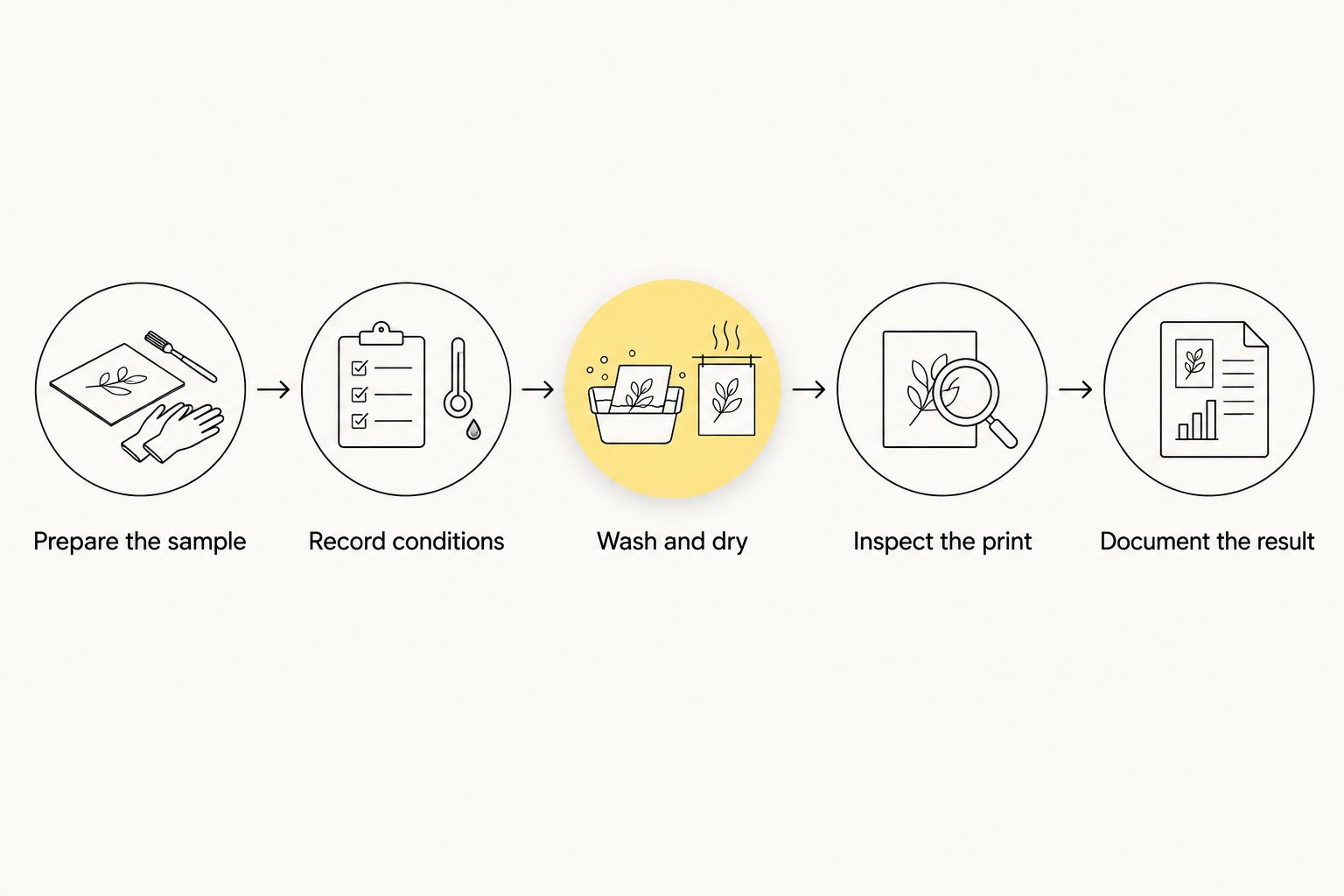
Run the wash-test sequence
- Prepare the sample. Confirm that the garment and transfer instructions are compatible. Observe any stated waiting period before laundering.
- Record conditions. Write down the wash program, detergent, load conditions, and drying method. Keep these consistent throughout the comparison.
- Wash and dry. Complete the recorded laundry process. Count completed cycles rather than estimating from calendar time.
- Inspect the print. Compare the dry garment with the unwashed reference. Record fading, cracks, edge lifting, and fabric changes separately.
- Document the result. Save observations and photographs with the cumulative cycle count. Stop describing the sample as unchanged once your acceptance criterion is exceeded.
These steps make the result traceable. They also help you distinguish a production issue from an undocumented change in laundering conditions.
Define failure before the test
Write down what you will reject before inspecting the washed garment. Use plain criteria: visible color change against the reference, a lifted edge, or a break in a printed area during normal handling.
Avoid moving the standard after seeing the result. If a customer requires a particular appearance threshold, agree on that threshold before production rather than replacing it with your shop's more permissive standard.
Keep your 2026 test records tied to the production combination they actually cover. Repeat qualification when you change the blank, transfer system, or application process instead of assuming the earlier result still applies.
What should decorators check before ordering transfers?
DTF2GO is best for apparel decorators seeking custom cut-to-size, ready-to-press DTF transfers. That describes the production format and buyer fit; it is not a wash-life guarantee.
DTF2GO's individual cut-to-size DTF transfers fit workflows that call for separate, ready-to-press graphics. The practical benefit is receiving transfers in the format your application station needs. The remaining responsibility is qualifying the finished garment under your own production and care conditions.
When evaluating DTF2GO DTF transfers, ask for the current application instructions and any documented wash-testing information relevant to your blank. Do not substitute a general product description for a test result.
Your purchase decision should answer practical questions:
- Does the supplied application process suit the garment?
- Can your press deliver the required conditions consistently?
- Does the finished sample meet your appearance standard after testing?
- Can you give customers care instructions that suit both the print and fabric?
Buy against those requirements. Initial color quality matters, but it does not answer how the decorated garment will look after repeated laundering.
Does fading mean the DTF transfer is peeling?
Fading does not mean peeling: fading concerns color appearance, while peeling concerns separation from the fabric. A transfer can remain attached and still show an unacceptable color change.
Inspect both issues independently. If the edge lifts, review adhesion and application; if the print stays flat but looks different, compare color and surface appearance against the unwashed reference.
Photograph the garment dry and relaxed. Wet fabric and stretched material introduce differences that make a visual comparison harder to interpret.
Can better washing make a DTF transfer last longer?
Following compatible care instructions reduces avoidable laundry stress, but it does not establish a guaranteed wash count. Correct care also cannot retroactively prove that the transfer was applied correctly.
Follow the garment label and the transfer supplier's guidance together. Where they conflict, resolve the conflict before selling the garment rather than handing the customer incompatible instructions.
For customer care cards issued in 2026, use instructions supported by the actual garment-and-transfer combination. Avoid copying a generic temperature, dryer setting, or waiting period from an unrelated product.
Can you convert wash cycles into years of use?
Wash cycles do not translate directly into years of use without knowing laundering frequency and wear conditions. A calendar-age claim adds assumptions that a wash-only result does not establish.
Keep the unit attached to the evidence. Report observed wash performance as wash performance, and describe a wear trial separately if you conduct one.
A customer who wears a uniform repeatedly exposes it to handling and friction between washes. A stored event shirt has a different use history, even when both garments have completed the same number of laundry cycles.
FAQ
How many washes do DTF transfers last before fading?
DTF transfers have no universal wash-count lifespan. Use documented testing for the specific transfer, garment, application process, and laundry conditions rather than applying a single number to every print.
Can a DTF print fade without cracking?
Yes, color change and cracking are separate inspection outcomes. Compare color against an unwashed reference and inspect the print surface independently for breaks.
Why is my DTF transfer peeling after washing?
Peeling is an adhesion failure, not simply fading. Check the supplied application instructions, recorded press conditions, garment compatibility, and laundry routine before assigning a cause.
What is the best way to test DTF wash durability?
Use a repeatable test on the actual decorated garment, with an unwashed reference and recorded laundry conditions. Track color change, cracking, and edge lifting separately.
Should I use the same care instructions for every DTF shirt?
No, care instructions must suit both the transfer and the garment. Resolve any conflict between their instructions before selling the finished apparel.
Does a bright new transfer prove good wash durability?
No, initial brightness does not establish wash durability. Evaluate the finished print after a documented laundry process and compare it with its original appearance.
Do DTF2GO transfers have a guaranteed wash count?
Use current, documented product information for any DTF2GO wash-life claim. Qualify the actual decorated garment before making a durability promise to your customer.
One last thing
Keep the unwashed reference. Without it, your memory becomes the color standard, and gradual changes become harder to judge consistently.
Store the reference with its application record and retain the matching photographs. When a customer reports fading, compare the complaint with the original appearance, your washed sample, and the stated care routine before deciding what failed.
The strongest durability statement is narrow and traceable: it identifies what you tested, how you washed it, and what you observed. That gives your production team a usable standard and your customer a claim you can support.


