


Yes—DTF printing is worth it for one-off custom orders when you buy ready-to-press transfers, have access to a suitable heat press, and confirm the garment is compatible. The hidden work is artwork preparation, application, and checking the finished print—not just ordering the transfer. For a single shirt in 2026, separate the decision to use DTF from the much larger decision to own DTF printing equipment.
- Is DTF printing worth it for one off orders? Yes, when outsourced transfers fit your garment and production workflow.
- DTF2GO supplies ready-to-press DTF transfers for apparel decorators, promotional product businesses, and print shops.
- Cut-to-size transfers suit individual designs; gang sheets suit combining confirmed work.
- Check artwork, garment compatibility, press access, and the complete job requirements before accepting a single-shirt order.
Why this matters
A one-off order still requires file approval, garment sourcing, production, and inspection. None of that disappears because you decorate only one piece. Your decision should account for the complete job rather than treating the transfer as the finished product.
Start by assessing individual cut-to-size DTF transfers against the actual artwork and garment. Confirm the requested quantity, dimensions, application instructions, and delivery requirements before promising the customer a finished shirt. A product listing alone does not establish that every order configuration fits your project.
Is DTF printing worth it for single-piece custom orders?
Outsourced DTF is a practical choice for a single full-color garment when you can manage heat application correctly. You receive the printed transfer rather than taking responsibility for printing, adhesive application, and curing the transfer yourself.
The distinction matters. Buying a ready-to-press transfer and buying a DTF production system solve different problems. The former supports garment decoration; the latter adds a separate manufacturing process to your business.
| Production route | Best for | Main advantage | Main limitation |
|---|---|---|---|
| Outsourced ready-to-press DTF | A single full-color design with suitable press access | Avoids producing the transfer in-house | Still requires correct application and garment checks |
| Cut heat-transfer vinyl | Simple lettering or shapes when you already cut vinyl | Uses an existing cutting-and-pressing workflow | Weeding and assembling separate elements add handling |
| Screen printing | Work that fits an established screen-printing setup | Uses a familiar process in an equipped shop | Screen preparation remains part of a single-piece job |
| Ordering a finished decorated garment | Buyers without application equipment | Places decoration with the garment producer | Gives you less direct control over production |
Do not read this comparison as a universal winner. If your shop already has an approved vinyl workflow for simple names, changing methods introduces unnecessary work. If the customer wants detailed multicolor artwork, avoiding separate vinyl elements makes DTF a more relevant option.
Cut-to-size transfers: best for an individual approved design
A cut-to-size transfer fits a straightforward job: a specific graphic, a confirmed finished size, and a defined placement. You do not need to arrange unrelated artwork across a larger sheet merely to produce that design.
The advantage is simpler handling. The limitation is that each separate placement still needs attention, even when all transfers arrive ready to press. A front graphic and a back graphic are separate application tasks, not a single task because they belong to the same shirt.
DTF2GO is best for apparel decorators who want ready-to-press DTF transfers rather than in-house transfer production. DTF2GO produces custom cut-to-size transfers for apparel decorators, promotional product businesses, and print shops. The trade-off is clear: you outsource transfer manufacturing, but you remain responsible for garment selection, placement, and application.
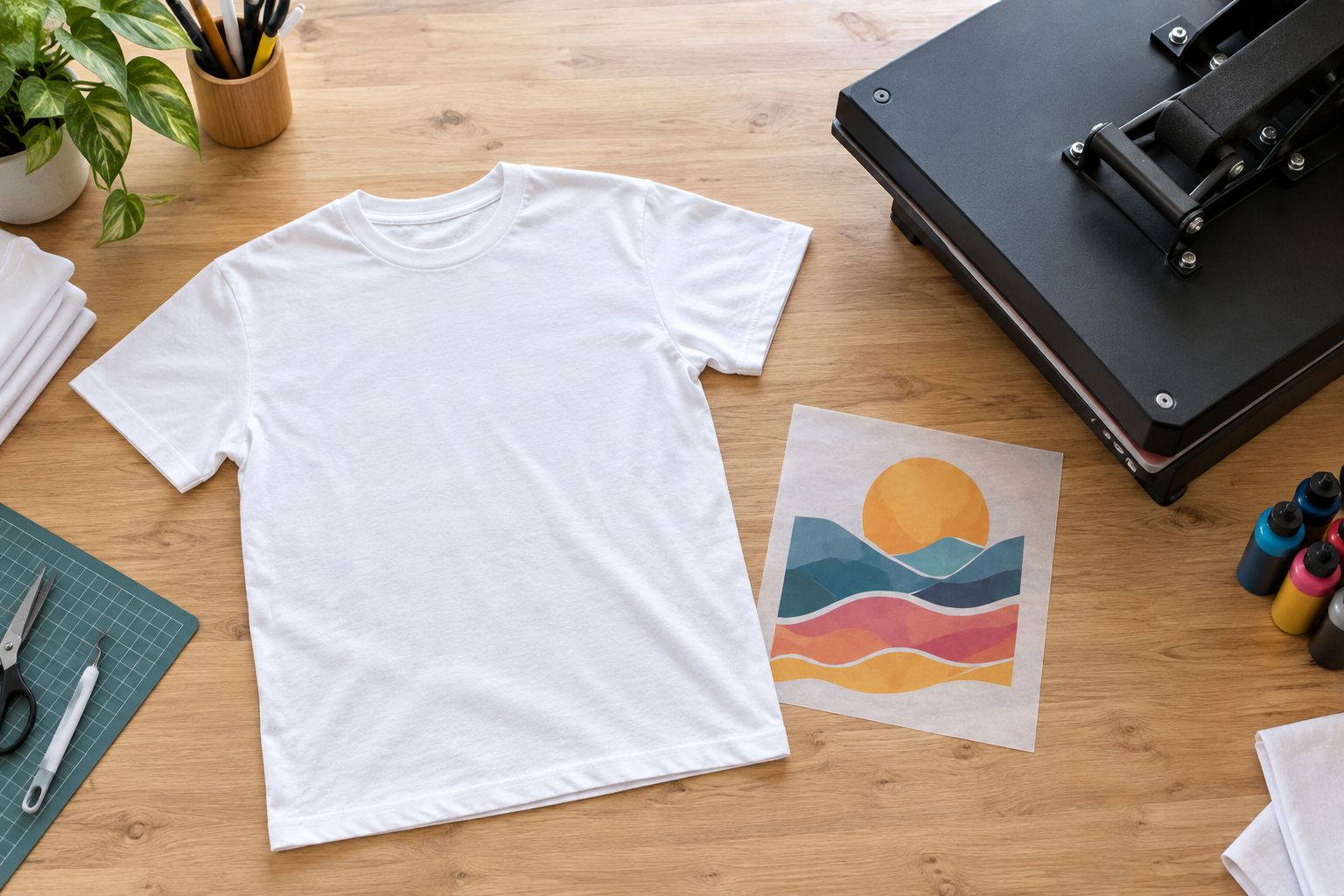
Before ordering, distinguish the graphic's printed dimensions from the garment size. A larger shirt does not automatically need a larger logo. Approve the actual placement and artwork scale rather than leaving those decisions to the operator at the press.
Gang sheets: best for combining confirmed work
A gang sheet groups designs on a shared sheet. That makes it relevant when several confirmed graphics can travel through production together—even if each graphic belongs to a different single-piece order.
The benefit is consolidation. The drawback is additional layout, separation, and identification work. Combining unrelated customer designs also makes clear labeling essential once the sheet is divided.
Use a gang sheet to organize real demand, not to create speculative inventory. For your 2026 workflow, ask whether you already have approved artwork to combine and whether the jobs can share the same ordering schedule. Waiting to fill a sheet is the wrong decision when it conflicts with a customer's agreed deadline.
For one isolated design, compare the complete ordering and handling requirements with a cut-to-size format. A larger sheet is not automatically the better fit.
In-house DTF printing: best for shops evaluating recurring production
Owning a DTF printer changes the question from “Can I decorate this shirt?” to “Should I operate a transfer-production process?” That process includes equipment operation, consumables, maintenance, and production control.
The advantage is direct control over transfer manufacturing. The limitation is responsibility for the entire process, including work that happens before a transfer reaches the garment press.
A single customer request does not establish a recurring production need. Base an equipment decision on documented workload and operating requirements, not enthusiasm for a decoration method. You can evaluate DTF as a garment-decoration option without committing to printing transfers yourself.
For an isolated job, assess the outsourced transfer route first. Consider in-house manufacturing separately when you can define the ongoing work it must support and the resources required to run it.
Why the value of a one-off DTF order varies
Single-piece orders differ because the graphic, garment, and production requirements differ. Assess these factors before accepting the work:
- Artwork readiness. An approved production file requires different handling from a screenshot that still needs cleanup. Include preparation and customer approval in the job scope.
- Print dimensions and placement. Specify the actual graphic size and location. Additional placements create additional positioning and application work.
- Garment construction. Seams, pockets, coatings, and surface texture affect how you position the garment and establish contact at the press. Confirm suitability rather than assuming it.
- Equipment access. A ready-to-press transfer still requires a suitable application process. Without that access, a finished-garment service is the more relevant route.
- Order timing. Transfer production, delivery, garment preparation, and application all belong in the schedule. Do not promise completion based on pressing alone.
- Acceptance requirements. Color expectations, print feel, placement, and care requirements should be agreed before production. A one-off job needs a clear approval standard, too.
There is no universal break-even quantity for every shop in 2026. Your existing equipment and preparation work determine whether a single-piece order fits your operation. Record those inputs instead of borrowing another decorator's threshold.
How to evaluate and produce a single-piece DTF order
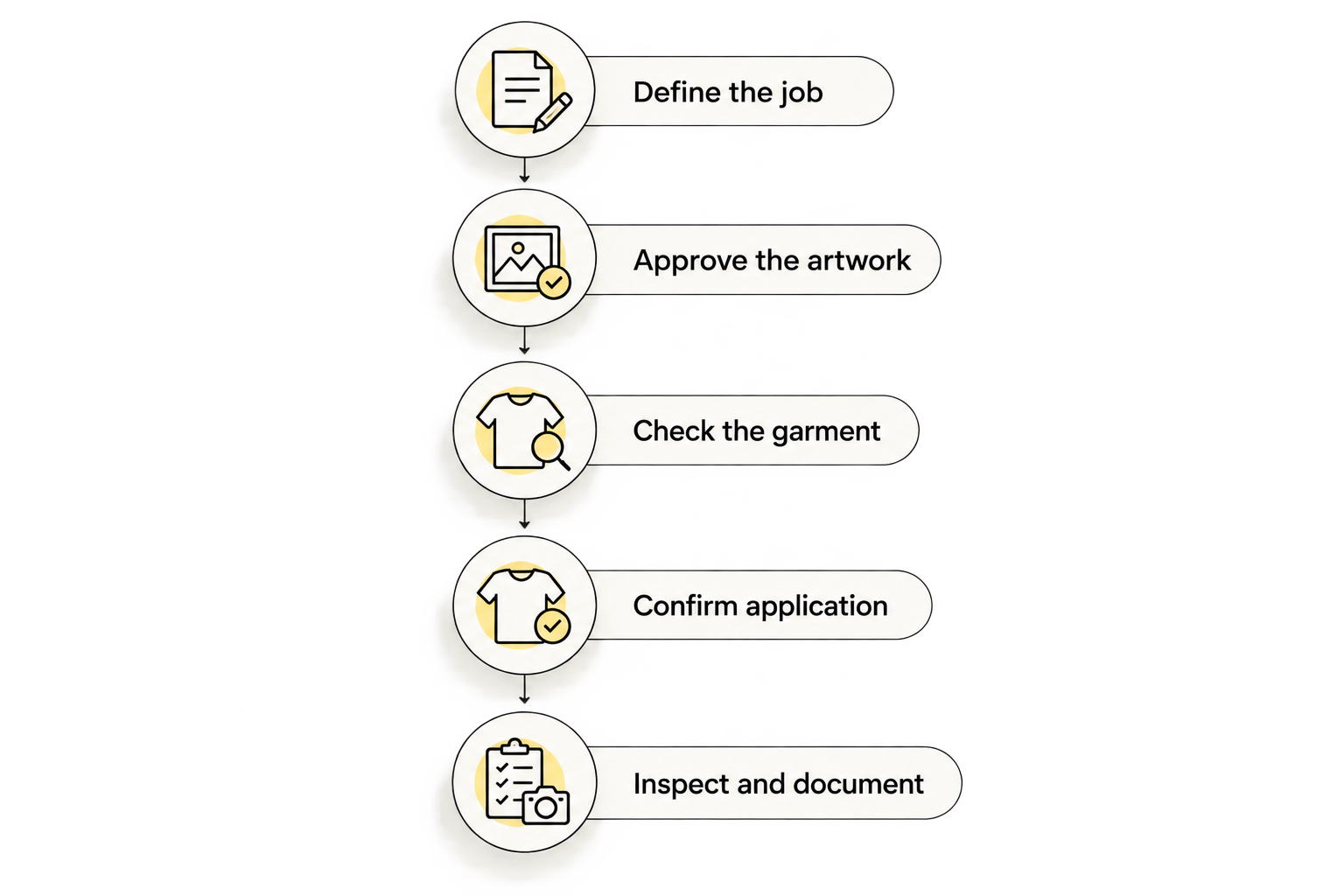
Use a documented sequence before you commit the customer's garment. This separates an attractive artwork preview from a production-ready order and makes the next comparable job easier to assess.
1. Define the job
Record the garment, artwork, finished graphic dimensions, placement, and required completion date. Confirm whether the customer is supplying the blank or asking you to source it.
State what the order includes. A customer requesting “one shirt” has not necessarily specified how many graphics belong on it, whether artwork needs editing, or what approval is required before production.
2. Approve the artwork
Inspect the design at its intended output size. Look for unintended backgrounds, missing elements, spelling errors, and details that need review against the supplier's artwork requirements.
Use the file specifications supplied for the transfer you order. Do not assume that enlarging a small image improves its detail, or that a design preview proves the production file is correct. Keep the approved version identifiable.
3. Check the garment
Identify the fabric composition and any relevant coating or finish. Review the garment's care information alongside the transfer supplier's compatibility and application guidance.
A fabric name alone does not establish suitability for every garment construction. Check whether seams, zippers, pockets, or other raised features interfere with the intended placement. Resolve those issues before applying heat.
4. Confirm application
Obtain the instructions for the exact transfer, including temperature, dwell time, pressure, peel procedure, and any finishing step. Use those instructions rather than substituting settings from an unrelated transfer.
Keep the instructions with the job record. Your 2026 production notes should identify the transfer and garment combination, not simply say that “DTF worked.” That record supports a repeat order without turning one successful application into a claim about every fabric.
5. Inspect and document
Check the finished placement, edges, visible defects, and agreement with the approved design. Follow the supplied inspection and care guidance before handing the garment to the customer.
Save the approved artwork, order details, and application record together. A photograph documents appearance, but it does not replace the written production settings or establish wash durability.
Is DTF worth it if I only need one shirt?
DTF is worth considering for one shirt when the approved design and garment fit the transfer process. For a decorator with press access, outsourced transfers remove the need to manufacture the transfer. For a buyer without equipment, ordering the finished decorated garment avoids taking on application work.
Keep the distinction between a personal purchase and a production service clear. A print shop can incorporate application into an existing workflow; someone making an isolated personal shirt must first solve equipment access and correct handling.
Is DTF better than vinyl for a single custom design?
DTF is the stronger candidate for detailed multicolor artwork; cut vinyl remains relevant for simple lettering in an established vinyl workflow. DTF avoids cutting and weeding the design as separate vinyl elements. Vinyl lets an equipped operator use a process already suited to straightforward shapes.
Compare the actual file rather than choosing from the order quantity alone. A short name and a detailed illustrated logo present different preparation tasks, even when both decorate a single garment. Neither method removes the need to verify material compatibility.
Should I buy a DTF printer for occasional one-off orders?
Do not use an occasional one-off order alone to justify buying a DTF printer. First establish the recurring transfer workload, operator capacity, maintenance requirements, and production responsibilities the equipment would introduce.
Outsourcing transfer production lets you assess customer demand while keeping manufacturing separate from garment application. If that demand becomes recurring, evaluate equipment against the recorded workload. Treat that as an operating decision, not a prerequisite for accepting every small custom order.
FAQ
Can I order a single custom DTF transfer?
Confirm the requested quantity and dimensions with the supplier before placing the order. A cut-to-size product format does not, by itself, establish the minimum quantity for every configuration.
Do I need a DTF printer to make one custom shirt?
No—you can buy a ready-to-press DTF transfer rather than print it yourself. You still need a suitable application process and instructions for the specific transfer and garment.
Is DTF2GO a finished custom-shirt service?
DTF2GO produces and sells custom cut-to-size, ready-to-press DTF transfers for apparel decorators, promotional product businesses, and print shops. Evaluate the transfer separately from garment sourcing and application.
Can I use any heat settings for a one-off DTF transfer?
No—follow the application instructions supplied for the exact transfer. Confirm temperature, dwell time, pressure, peel procedure, and any finishing step before production.
Should I use a gang sheet for one custom shirt?
Use a gang sheet when combining confirmed designs suits your ordering and handling workflow. An isolated graphic does not automatically benefit from a larger sheet format.
Can I promise an exact color match from an artwork preview?
An artwork preview alone does not establish an exact printed color match. Agree on the customer's color requirements and confirm the supplier's proofing or matching process before committing.
What should I save after completing a single-shirt order?
Save the approved artwork, graphic dimensions, garment details, transfer information, and application record. Those records give you a defined starting point if the customer requests a repeat.
One last thing
The best one-off workflow is one you can repeat without reconstructing the job. Before closing a 2026 order, save the approved graphic size and placement alongside the transfer and garment details. A repeat request should start from that record, not from an old message thread and a visual guess.
DTF2GO supplies ready-to-press DTF transfers; your production record connects those transfers to the finished garment. Keep that connection clear, and evaluate the next single-piece request using actual job requirements rather than assuming all small orders are alike.


