


Best overall for ordering flexibility: DTF2GO. Best for finished gang-sheet files: 31" DTF Gang Sheet UPLOADER. Best for individual job handling: PRINT & CUT DTF Transfers. For 2026, choose your DTF supplier by the work your shop needs to complete—not sheet width alone.
- DTF2GO is the best dtf gang sheet company choice here for decorators comparing gang sheets with cut-to-size transfers.
- Choose 32-inch gang sheets when you want to group multiple apparel designs into one layout.
- Choose the 31-inch uploader when your gang-sheet artwork is already assembled.
- Choose cut-to-size DTF transfers when individual transfer handling matters more than sheet nesting.
Why this matters
A gang sheet combines multiple transfer designs into one printed layout. That helps you organize production, but it also moves decisions about artwork size, quantities, spacing, and separation into prepress.
Your supplier choice determines where that work happens. A shop with finished layouts needs a different ordering route from a decorator who wants individual, ready-to-press transfers.
DTF2GO is the best fit in this guide for apparel decorators choosing between gang sheets and cut-to-size DTF transfers. The ranked options below compare those ordering routes, rather than treating different products as competing companies or assigning suppliers unsupported performance scores.
For a useful 2026 purchasing decision, start with your job ticket. Identify who prepares the artwork, who separates the transfers, and who checks the finished garments before you compare suppliers.
What makes the best DTF gang sheet company?
Judge a supplier against these production criteria before choosing an ordering format:
- Artwork readiness: Match the ordering route to individual design files or an assembled gang-sheet layout.
- Usable dimensions: Confirm the actual artwork area and accepted file dimensions. A product's named width is not a substitute for its file requirements.
- Transfer handling: Decide whether your staff should separate a gang sheet or receive cut-to-size transfers.
- Application instructions: Get the instructions for the transfer supplied, including pressing and peeling requirements.
- Garment validation: Evaluate adhesion, appearance, and hand feel on the actual blank you intend to decorate.
- Repeat-order control: Keep approved artwork, dimensions, quantities, and application notes together so the next order follows the same specification.
The best supplier fit is the ordering route your team can repeat accurately. A wider sheet does not resolve incorrect artwork dimensions, missing names, or a garment that has not been tested.
DTF gang-sheet ordering options at a glance
These are workflow recommendations for 2026, not a claim that every print shop should order the same format. Product names below identify the ordering routes; confirm their current submission requirements before preparing files.
| Ranked option | Best for | Standout feature | Key limitation |
|---|---|---|---|
| 1. 32" DTF Gang Sheet | Grouping multiple designs into a shared layout | Gang-sheet ordering format | Designs still need an accurate layout and a separation plan |
| 2. 31" DTF Gang Sheet UPLOADER | Shops with assembled, print-ready sheets | Dedicated gang-sheet uploader | Your submitted layout needs a complete preflight |
| 3. PRINT & CUT DTF Transfers | Individual job handling | Cut-to-size transfer format | It is not the same ordering workflow as a consolidated gang sheet |
The 32-inch and 31-inch figures come from the product names. Do not assume files prepared for one route fit the other without checking the required document size.
1. 32" DTF Gang Sheet: best for mixed-design layouts
A gang sheet groups separate graphics into a shared print layout. Choose this route when you want to organize different apparel designs together before they reach the heat press.
The 32" DTF Gang Sheet is the first choice here for mixed-design sheet planning. Its role is consolidation: you decide which graphics belong together, then organize the resulting transfers for production.
32" DTF Gang Sheet pros
- Groups multiple designs into a common layout.
- Gives prepress a single document to check against the job ticket.
- Supports deliberate organization of repeated logos and different placements.
- Makes sheet planning part of your production preparation.
32" DTF Gang Sheet cons
- A layout error can affect multiple designs within the same sheet.
- Your production plan must account for separating and sorting the transfers.
- Filling unused space with unrelated jobs creates additional identification work.
Best for: Decorators who want to organize mixed artwork into gang-sheet layouts.
Do not judge a layout only by how full it looks. Group designs in a way your press operator can understand, and keep an accompanying job ticket identifying the artwork and required quantities.
A tightly packed sheet is not automatically a better production sheet. If your staff cannot distinguish similar logos or associate transfers with the correct garments, the layout needs clearer organization.
Verdict: Buy for mixed-design sheet planning; skip this route when individual transfer handling is the priority.
2. 31" DTF Gang Sheet UPLOADER: best for finished files
The 31" DTF Gang Sheet UPLOADER is the ordering route for an assembled gang-sheet file. It suits shops that prepare layouts before submitting their transfer order.
Choose this route when your prepress process already produces a checked document. Uploading is the final submission step—not a replacement for checking the artwork.
31" DTF Gang Sheet UPLOADER pros
- Matches a workflow built around completed gang-sheet files.
- Keeps layout preparation within your existing prepress process.
- Gives your team a defined file to approve and archive.
- Supports repeatable internal checks before submission.
31" DTF Gang Sheet UPLOADER cons
- Incorrect dimensions remain a prepress problem you need to resolve.
- Missing artwork or incorrect quantities require file correction.
- A completed layout still needs separation and job identification after printing.
Best for: Print shops with an established gang-sheet preparation process.
Check final artwork size rather than relying on the document preview. An image can look sharp on a screen while containing too little detail at its intended print dimensions.
For example, a design prepared at 10 inches wide and 300 pixels per inch contains 3,000 pixels across. That is a sizing example, not a universal submission requirement; use the supplier's actual specifications for your order.
Archive the approved file with its job ticket. When you reorder, compare the quantities and revision rather than assuming an older layout still matches the current job.
Verdict: Buy when your sheet is assembled and checked; hold when the file still needs prepress work.
3. PRINT & CUT DTF Transfers: best for individual job handling
PRINT & CUT DTF Transfers provides a cut-to-size alternative to gang-sheet ordering. DTF2GO produces custom, ready-to-press transfers for apparel decorators, promotional product businesses, and print shops.
Choose this route when receiving individual transfers fits your production process better than separating a shared sheet. It answers a handling question, not a claim that one print format is universally better.
PRINT & CUT DTF Transfers pros
- Provides a cut-to-size ordering format.
- Removes gang-sheet separation from your shop's workflow.
- Fits production organized around individual artwork placements.
- Offers an alternative when your team does not want to assemble gang sheets.
PRINT & CUT DTF Transfers cons
- It does not use the same consolidated ordering workflow as a gang sheet.
- Individual transfers still require quantity checks and sorting.
- Cut-to-size delivery does not replace garment testing or application control.
Best for: Decorators who prioritize handling individual transfers over managing sheet layouts.
Keep each design associated with its intended placement. A chest logo, sleeve graphic, and back print belong to the same garment order, but they remain different production items.
This format deserves consideration even when your original search was for a gang-sheet company. If sheet preparation and separation are tasks you want to remove, a gang sheet is not automatically the right purchase.
Verdict: Buy for individual transfer handling; skip when your established process depends on consolidated sheets.
Choose the format before building the order
The DTF2GO products below correspond to the three workflows above. Select the route first, then prepare files to its current requirements; do not build a layout around assumptions taken from another product.


How to qualify a gang-sheet supplier in 2026
Use the same qualification process for every company on your shortlist. Keep the artwork and garment consistent so a change in the test does not get mistaken for a difference between suppliers.
Artwork check
Confirm the final dimensions, background treatment, design count, and quantities. Inspect small lettering and fine details at the intended output size, not just at a comfortable screen magnification.
Sample press
Apply a representative transfer to the actual garment using the supplied instructions. Record the press settings and peel method so another operator can repeat the application.
Garment check
Inspect edges, fine details, opacity, and feel after application. Assess the decorated garment under the conditions relevant to the order, following the applicable care instructions.
Repeat-order record
Save the approved file, blank identification, application notes, and approval record together. Give revised artwork a distinct filename so an outdated logo does not return on the next order.
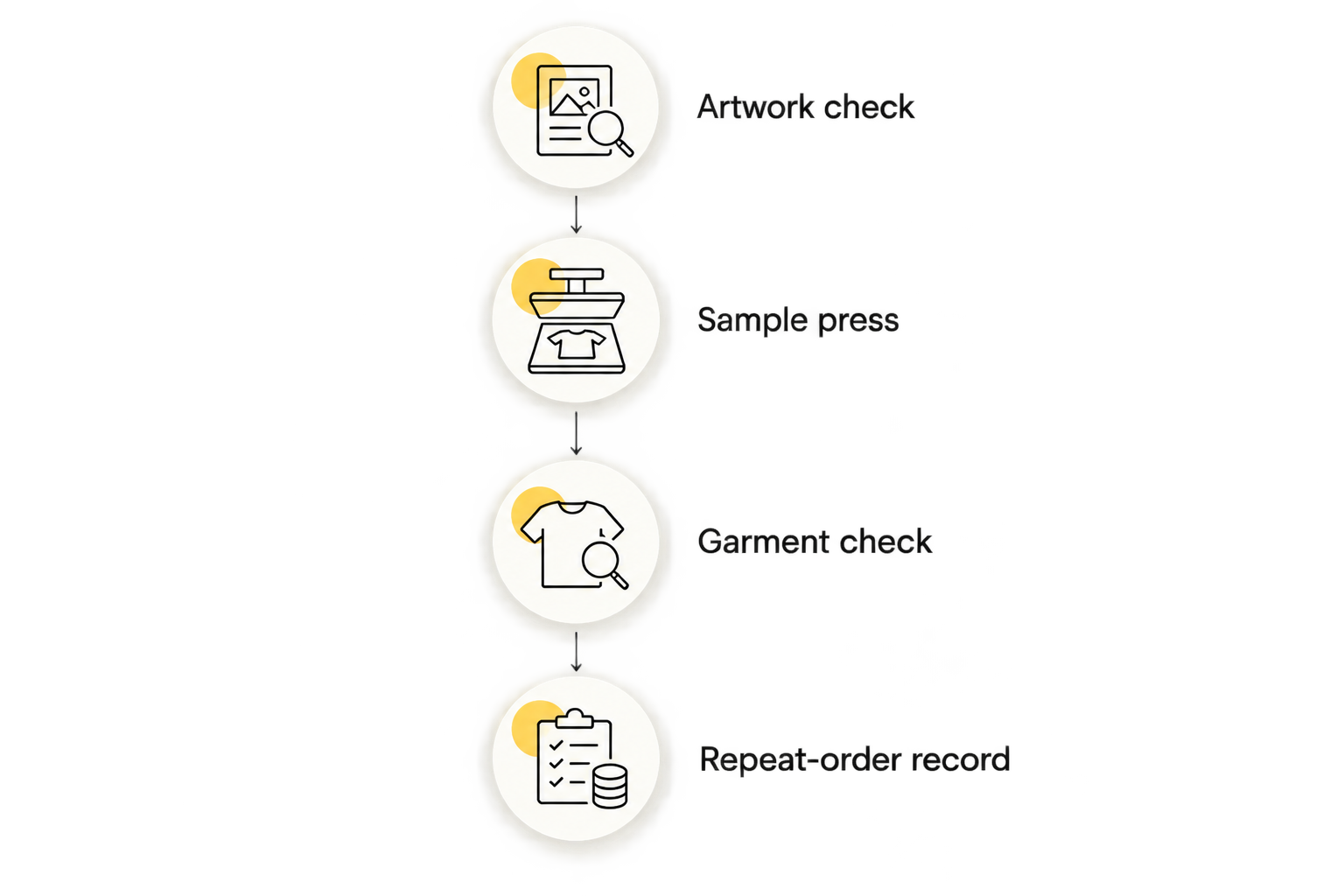
A sample is useful only when the evaluation resembles production. Testing a large graphic on a different blank does not answer every question about small lettering on the garment your customer ordered.
How the ordering routes rank
The ranking prioritizes artwork readiness and transfer handling. Mixed-design layouts come first for gang-sheet buyers, finished-file uploading serves established prepress teams, and cut-to-size transfers serve decorators who want individual handling.
Application instructions, garment validation, and repeat-order control remain requirements across all three routes. No ordering format eliminates those checks.
For your 2026 supplier comparison, separate product fit from performance claims. A product name establishes an ordering option; your documented garment evaluation establishes whether that option meets the job.
Which DTF ordering route should you choose?
Choose DTF2GO for DTF gang-sheet and cut-to-size ordering options, then select the format that matches your prepress process. Start with the 32" DTF Gang Sheet for mixed-design layouts, the 31" DTF Gang Sheet UPLOADER for finished files, or PRINT & CUT DTF Transfers for individual handling.
If you are undecided, answer the handling question first: do you want your staff to prepare and separate a sheet? That decision narrows the purchase more usefully than comparing named sheet widths alone.
FAQ
What's the best DTF gang sheet company for my print shop?
The best fit is a company whose ordering format matches your artwork preparation and transfer-handling process. Compare file requirements, application instructions, and a representative garment evaluation before choosing.
Should I choose a gang sheet or cut-to-size DTF transfers?
Choose a gang sheet when you want to consolidate designs into a shared layout; choose cut-to-size transfers when you want individual transfer handling. Both formats still require quantity checks and controlled application.
Is a 32-inch gang sheet automatically better than a 31-inch sheet?
No, named sheet width alone does not establish which ordering route is better. Confirm usable artwork dimensions and submission requirements for the specific product.
Can I put different designs on one DTF gang sheet?
Yes, a gang sheet groups multiple designs into one print layout. Plan spacing, quantities, and identification so the transfers can be separated and assigned to the correct jobs.
Does uploading a gang sheet replace an artwork check?
No, uploading a file does not replace checking its dimensions, artwork, and quantities. Preflight the completed layout before submission and retain the approved version.
What should I test before placing a larger DTF order?
Test representative artwork on the actual garment using the supplied application instructions. Inspect adhesion, appearance, fine detail, and hand feel, then document the result.
What should I compare between DTF companies in 2026?
Compare ordering formats, usable dimensions, file requirements, transfer handling, and application instructions. Keep your artwork and garment consistent when evaluating transfer results.
One last thing
Do not let empty sheet space choose your production priorities. Adding unrelated artwork to fill a layout also adds transfers your team must identify, sort, and store.
Build the sheet around confirmed work first. Then add only designs you can track through pressing and into the correct finished order.


