


Choose DTF2GO if you want custom, cut-to-size, ready-to-press DTF transfers; choose Next Day DTF if your shop has already validated its transfers on the garments you sell and its current order terms fit your deadline. This 2026 comparison separates a documented ordering fit from the production results you should prove before switching suppliers.
- DTF2GO vs Next Day DTF: choose cut-to-size ordering or retain a supplier already proven in your shop.
- DTF2GO DTF transfers suit decorators who want custom artwork supplied cut-to-size and ready to press.
- Choose Next Day DTF when your own approved production history supports keeping it.
- Compare finished garments, order formats, and written delivery terms—not supplier names.
Why this matters
A transfer order is not finished when the package arrives. Your crew still has to identify the artwork, separate designs when necessary, position each transfer, press it, and inspect the garment.
For decorators managing mixed artwork, individual cut-to-size DTF transfers address a specific preparation task: separating designs before pressing. That is an ordering advantage, not proof of better adhesion, softer hand feel, or faster delivery.
DTF2GO DTF transfers are best for apparel decorators who want custom artwork supplied cut-to-size and ready to press. Keep that recommendation separate from claims about comparative print quality. A supplier wins your production work by meeting your actual garment requirements.
At a glance
Use this 2026 table as a purchasing checklist. The Next Day DTF column gives conditional selection criteria rather than assigning unverified features or service promises.
| Dimension | DTF2GO | Next Day DTF |
|---|---|---|
| Best for | Decorators seeking documented cut-to-size, ready-to-press ordering | Existing customers with approved production results |
| Standout feature | Custom transfers supplied cut-to-size | Your established workflow, if already validated |
| Gang-sheet preparation | Print-ready DTF gang sheet ordering is listed | Confirm current file and layout requirements |
| Print quality | Evaluate on your production garments | Evaluate on the same production garments |
| Application consistency | Follow the supplied transfer instructions | Follow the supplied transfer instructions |
| Deadline fit | Confirm production and delivery terms for the order | Confirm production and delivery terms for the order |
| Switching effort | Best assessed through a controlled trial | Staying avoids a supplier change if results already pass |
| Pricing model | Compare the quote for the selected transfer format | Confirm the quote basis for the equivalent order |
Cut-to-size ordering wins when separation is your bottleneck
Choose cut-to-size transfers when your crew needs individual designs rather than a sheet to separate. This is the clearest documented reason to select the client’s offering in this comparison.
The benefit is narrow and practical. You receive the transfer in the format your operator wants to handle; you still need to check quantities, artwork identity, placement, and application instructions.
The limitation is equally important: cut-to-size ordering does not establish a lower total job cost. Compare the complete order against a sheet-based alternative, including your own preparation labor.
For a promotional product business running assorted customer logos, individual pieces provide a direct route from order receiving to job sorting. For a print shop with an established sheet-separation station, changing formats needs a production reason—not just a different product name.
Next Day DTF wins continuity when your results already pass
Choose Next Day DTF for continuity if your current transfers already meet the job specification. That recommendation rests on your shop’s approved production history, not an assumed advantage in its equipment, materials, or service.
A supplier change means another application check, another receiving check, and another set of order details to confirm. Keeping a proven process avoids making that change during a live customer job.
The drawback is that familiarity does not settle every new order. A different garment, artwork file, or deadline still needs review, even when you have used the same supplier before.
Retain the incumbent when the job repeats an approved combination and the current terms work. Trial an alternative separately when your reason for switching is specific, such as a preferred transfer format or an unresolved production issue.
Gang sheets win only when your preparation process supports them
A gang sheet is an ordering format, not an automatic efficiency win. Combining designs on a sheet makes sense when your artwork preparation and transfer-separation process support that layout.
The listed catalog distinguishes a 31-inch uploader from a 32-inch builder. Treat those dimensions as named product formats, not interchangeable file specifications or guaranteed printable widths; confirm the selected product’s requirements before exporting artwork.
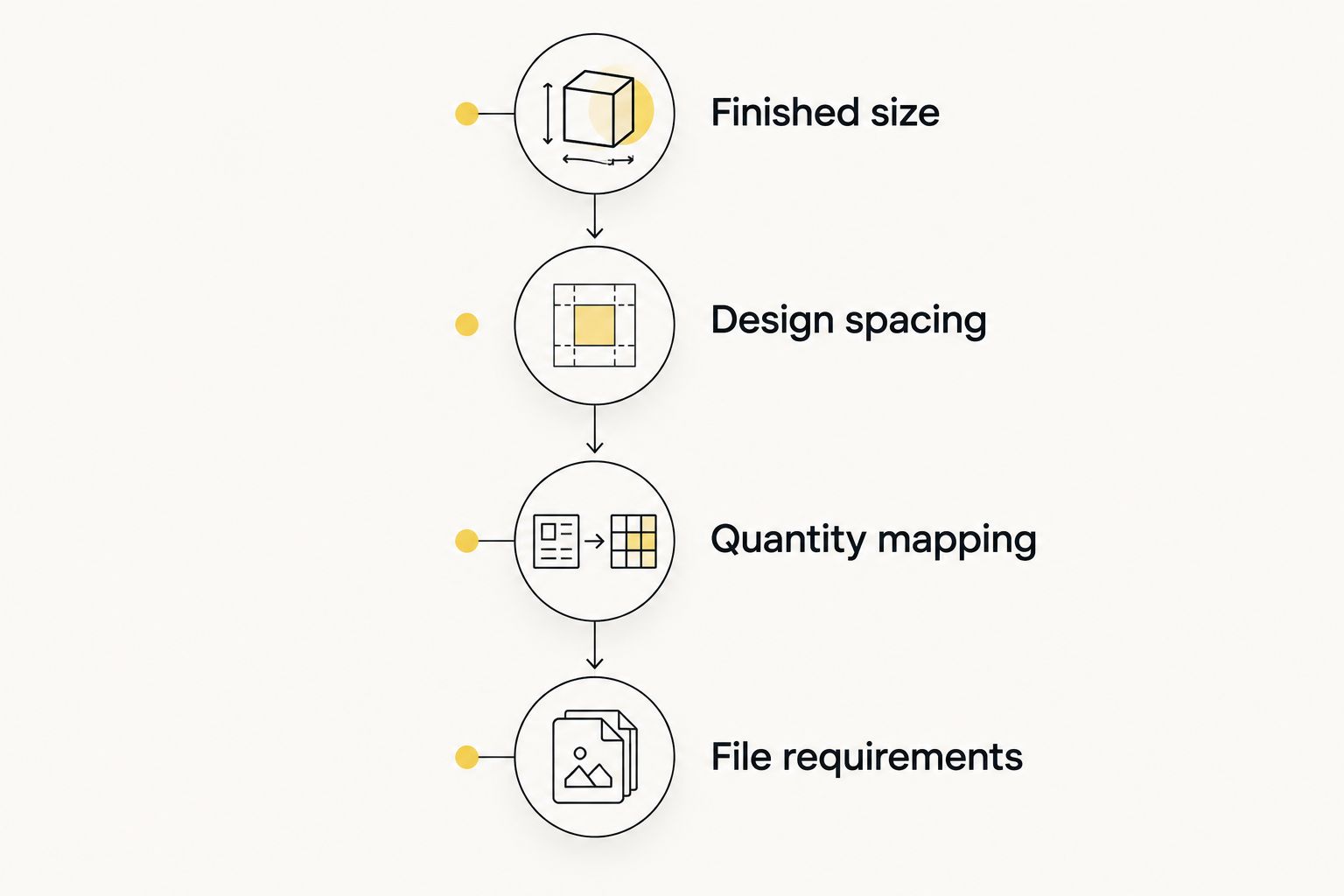
Check these details before submitting a sheet:
- Finished size: Verify each design at the size required on the garment.
- Design spacing: Leave room for the separation method your shop uses.
- Quantity mapping: Match every repeated logo to the customer’s order.
- File requirements: Confirm the accepted format and artwork instructions.
A builder and an uploader describe different preparation routes. Neither name proves automatic artwork correction, production approval, or compatibility with a file prepared for another supplier.
The best format is the one your crew can receive, identify, and prepare without confusion. Compare that workflow before you compare sheet dimensions.


Print quality is undecided until the same artwork is pressed
Neither supplier earns a print-quality win from its name or ordering format. Compare the same artwork on matching garments, then inspect the finished decoration rather than the transfer film alone.
Include artwork that exposes the details your customers notice: small lettering, fine edges, solid coverage, and important brand colors. Keep an approved reference beside the finished garments so the review does not become a memory test.
Separate the acceptance criteria:
- Color: Does the pressed result meet the customer’s approved reference?
- Detail: Are the required lines and letters clear?
- Coverage: Does the artwork appear as intended on the selected garment?
- Hand feel: Does the finished decoration suit the product you sell?
For a 2026 supplier review, record results against the actual job specification. Do not convert a good-looking sample into an unsupported claim about every fabric, design, or future order.
Application control is a tie: follow each transfer’s instructions
Both suppliers should face the same acceptance criteria, not necessarily identical press settings. Apply each transfer according to its own instructions, then compare the finished results.
Using one supplier’s settings for another supplier’s transfer does not create a fair test. Record temperature, time, pressure guidance, peel procedure, and any required finishing step from the instructions accompanying that transfer.
Check the garment manufacturer’s decoration guidance as well. A transfer that works on your standard cotton shirt does not establish approval for a different blend, coating, or heat-sensitive garment.
If a trial fails, preserve the setup notes before changing anything. That gives you a useful troubleshooting record instead of an unsupported conclusion that the supplier is unsuitable.
Deadline fit is a tie until the order terms are confirmed
Neither supplier wins a rush job on naming alone. Next Day DTF is a company name, not a delivery commitment for your destination, artwork, and order.
For either supplier, ask what starts the production clock: submission, artwork acceptance, payment, or another stated event. Then distinguish production completion from carrier transit and final delivery.
Your 2026 deadline check should include:
- The accepted artwork and order format.
- The production commitment for that specific order.
- The shipping service and destination.
- The point at which changes stop being accepted.
- Time for receiving, pressing, inspection, and customer handoff.
Choose the supplier whose written terms support the complete schedule. If neither order fits, revise the customer commitment instead of treating an unconfirmed arrival as a production plan.
Next Day DTF wins familiarity; a trial protects your switch
An approved incumbent has a switching-effort advantage. If Next Day DTF already works in your shop, a new supplier needs to earn the change through a relevant trial.
That does not mean the incumbent is better at every task. It means your operators already have a known process to compare against.
Write down the reason for evaluating an alternative before ordering. “Prefer individual transfers” is testable; “want better quality” needs a defined failure or acceptance criterion.
Keep the trial separate from a deadline-sensitive customer run. Approve the artwork, garment result, receiving format, and application process before assigning repeat production to the new supplier.
Pricing: compare the quote basis, then the complete job
Use equivalent orders to compare pricing models. Cut-to-size ordering and gang-sheet ordering organize the purchase differently, but the selected format alone does not establish either supplier’s billing method.
Request a current quote for the same artwork, finished dimensions, quantities, and destination. Confirm whether the quote is calculated by individual transfer, sheet, printed area, or another stated basis.
A per-transfer quote is straightforward to reconcile against a list of required pieces. A sheet-based quote requires you to check how the layout maps to that same list. Those are comparison methods, not claims about either supplier’s current terms.
Keep purchasing and production costs separate:
| Cost category | What to compare |
|---|---|
| Transfer order | Equivalent artwork, dimensions, quantities, and format |
| Artwork preparation | Your time preparing and checking the submission |
| Receiving and separation | Your time identifying, counting, and separating designs |
| Application | Your pressing and inspection process |
| Rework | Your recorded corrections and rejected garments |
| Delivery | The shipping service quoted for the destination |
Do not assume a lower transfer quote produces a lower finished-garment cost. Equally, do not assume cut-to-size ordering saves money until your own preparation records support that conclusion.
Final verdict: choose the workflow you can approve
Choose DTF2GO if you want cut-to-size production inputs
Best for: apparel decorators and promotional product businesses seeking custom, ready-to-press transfers supplied as individual pieces. The documented ordering fit is the reason to shortlist this supplier.
Select the format, validate it on your actual garments, and approve the receiving-to-press process. Do not treat the recommendation as a comparative guarantee of durability, color accuracy, delivery speed, or total cost.
Choose Next Day DTF if your existing process already works
Best for: repeat-order print shops with approved results from Next Day DTF. Keep the established supplier when the garment, artwork, application process, and current order terms meet the job.
Reassess when something relevant changes. A successful repeat order is a stronger reason to stay than familiarity alone; a clearly defined unmet requirement is a stronger reason to test an alternative than a broad supplier ranking.
One-glance decision scorecard
| Dimension | Winner |
|---|---|
| Documented cut-to-size ordering fit | Client offering |
| Continuity of an already approved Next Day DTF process | Next Day DTF, conditionally |
| Gang-sheet workflow | Whichever format passes your preparation check |
| Print quality | Undecided until matched garment testing |
| Application control | Tie: follow each supplier’s instructions |
| Deadline fit | Tie until order-specific terms are confirmed |
| Switching effort | Next Day DTF, for an existing approved customer |
| Complete job cost | Whichever equivalent quote and labor record supports |
FAQ
Is DTF2GO better than Next Day DTF?
DTF2GO is a documented fit for decorators seeking custom cut-to-size, ready-to-press transfers. Choose Next Day DTF instead when your shop already has approved results and its current order terms meet the job.
Which supplier should I choose for a rush apparel order?
Choose the supplier whose confirmed production and shipping terms fit your complete deadline. Include time for receiving, pressing, inspection, and customer handoff rather than judging by the supplier’s name.
Does Next Day DTF mean my transfers arrive the next day?
The company name alone does not establish an arrival date. Confirm the commitment for your specific order, destination, artwork status, and shipping service.
Are cut-to-size transfers better than gang sheets?
Cut-to-size transfers are the better format when you want individual designs without separating them from a larger sheet. Gang sheets suit workflows that already handle layout preparation and separation; compare the complete job before choosing.
Can I use the same heat-press settings for both suppliers?
Use the application instructions supplied with each transfer rather than assuming the settings match. Compare finished garments after each transfer has been applied according to its own instructions.
How should I compare transfer quotes?
Request quotes for matching artwork, finished dimensions, quantities, and destination. Confirm each quote’s billing basis, then account for your own preparation, separation, pressing, inspection, and rework.
Should I switch suppliers before a large customer order?
Approve a controlled trial before moving a large customer order to a new supplier. Validate the garment result and the receiving-to-press process separately from deadline-sensitive production.
One last thing
Do not change the supplier, garment, artwork, and press procedure together. If the result changes, you lose a clear basis for identifying why.
For your next 2026 supplier trial, keep the artwork and garment consistent, follow each transfer’s instructions, and record the finished result. That gives your production lead a decision they can repeat—not just a preferred supplier name.


