


Direct-to-film transfers fade, crack, or peel faster outdoors than they do on a closet hanger, and the format you pick decides whether a logo survives a full season on a work truck, a boat deck, or a hi-vis vest. This guide ranks the DTF2GO transfer formats built for outdoor and UV-resistant DTF transfers in 2026, matched to the job each one actually does best.
- Premium UV-DTF Transfers win overall for outdoor and UV-resistant DTF transfers in 2026 on signage and hard surfaces.
- Individual cut-to-size DTF transfers hold up best on outdoor apparel and workwear that also gets washed weekly.
- The 32-inch DTF Gang Sheet BUILDER wins for high-volume outdoor apparel runs when there's no print-ready art yet.
- The 31-inch DTF Gang Sheet UPLOADER is faster when the art is already print-ready and the batch is large.
- A free DTF Transfer Sample settles the UV and wash question before a bulk outdoor order goes out.
Why this matters
Sunlight breaks down dye-based inks fast because UV radiation attacks the dye molecule directly; pigment-based inks, which is what DTF printing uses, hold their color longer because the pigment sits as a solid particle inside the film rather than dissolving into it. That's the whole reason DTF outperforms plenty of older transfer methods on anything that lives outside — landscaping crews, roofing contractors, marinas, campgrounds, golf courses, food trucks, all businesses whose branded apparel spends real hours in direct sun.
But "DTF" isn't one product. Individual cut-to-size DTF transfers are built for fabric. UV-DTF is a different adhesive system built for rigid, non-fabric surfaces — wood signs, metal panels, tumblers, car decals — and it cures under UV light instead of heat alone. Picking the wrong one for an outdoor job is the most common reason a customer comes back in 2026 asking why their logo cracked after one summer.
What makes the best outdoor DTF transfer for UV resistance
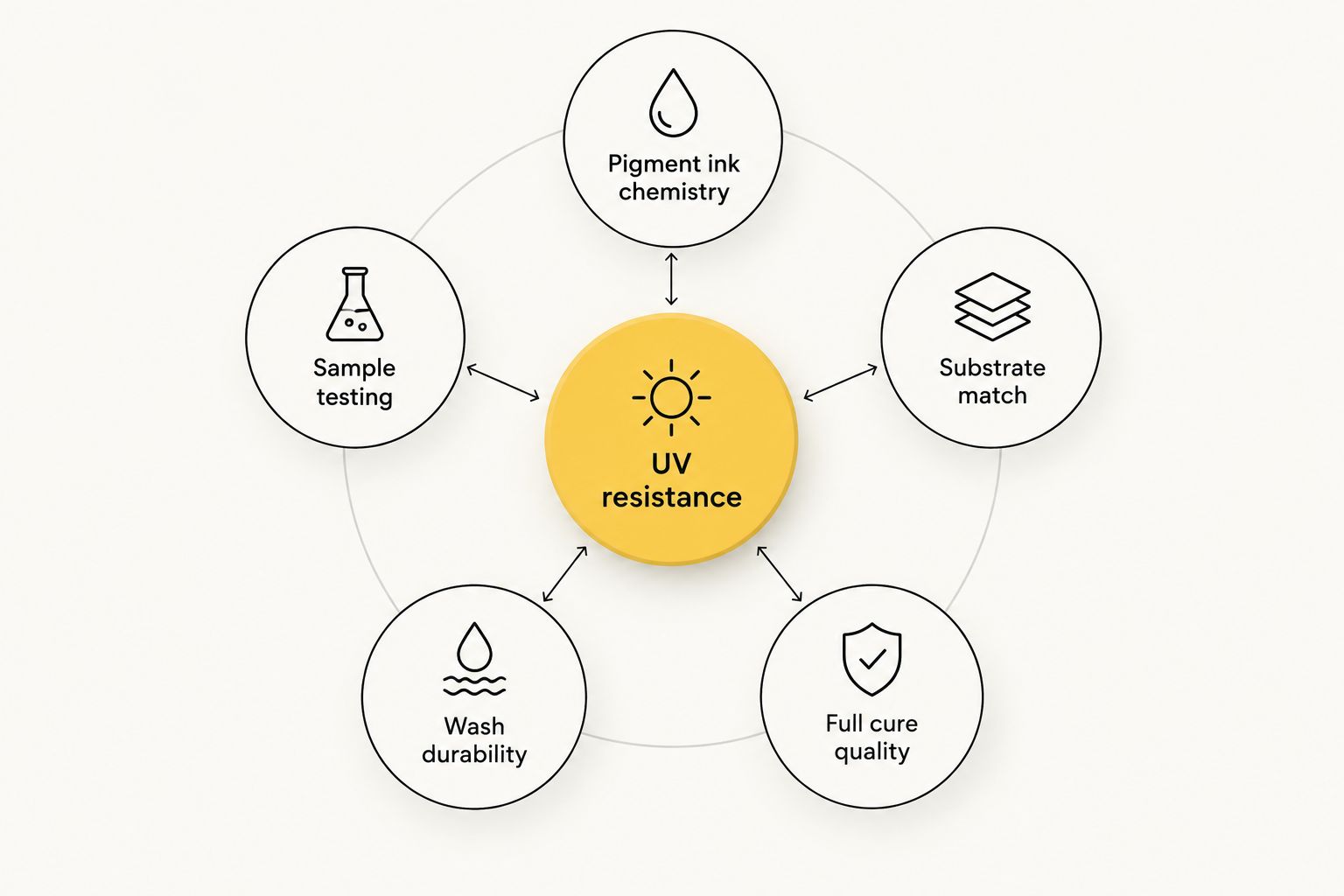
- Pigment-based ink chemistry — resists UV fade meaningfully better than dye-based inks on the same fabric
- Film and adhesive matched to the substrate — fabric formats and rigid-surface (UV) formats aren't interchangeable
- Full cure quality — an undercured transfer cracks faster once heat and sun cycling starts
- Wash durability alongside sun exposure — outdoor apparel gets both, not one or the other
- Gang sheet efficiency at volume — shops running fleets of outdoor workwear need cost-per-piece to hold up
- A sample step before bulk — UV performance is easiest to confirm on a real piece of film, not a spec sheet
Outdoor DTF transfers at a glance
| Transfer format | Best for | Standout feature | Key limitation |
|---|---|---|---|
| Premium UV-DTF Transfers | Outdoor signage, decals, hard surfaces | UV-cured adhesive bonds to wood, metal, and glass | Not built for stretch fabrics like spandex |
| PRINT & CUT (individual cut-to-size) DTF Transfers | Outdoor apparel and workwear logos | Pigment ink printed on a 9-color print system | Needs a heat press; not a peel-and-stick format |
| 32" DTF Gang Sheet BUILDER | High-volume outdoor apparel runs, no print-ready art | Built-in layout tool for shops without a designer on staff | Takes longer to finalize than uploading a ready file |
| 31" DTF Gang Sheet UPLOADER | Batching multiple outdoor designs onto one production run | Fastest turnaround once art is print-ready | Requires correctly sized artwork before upload |
| DTF Transfers Samples | Testing UV and wash durability before a bulk order | Real film in hand, not a spec claim | Not a production format by itself |
1. Premium UV-DTF Transfers: best outdoor DTF transfer for signage and hard surfaces
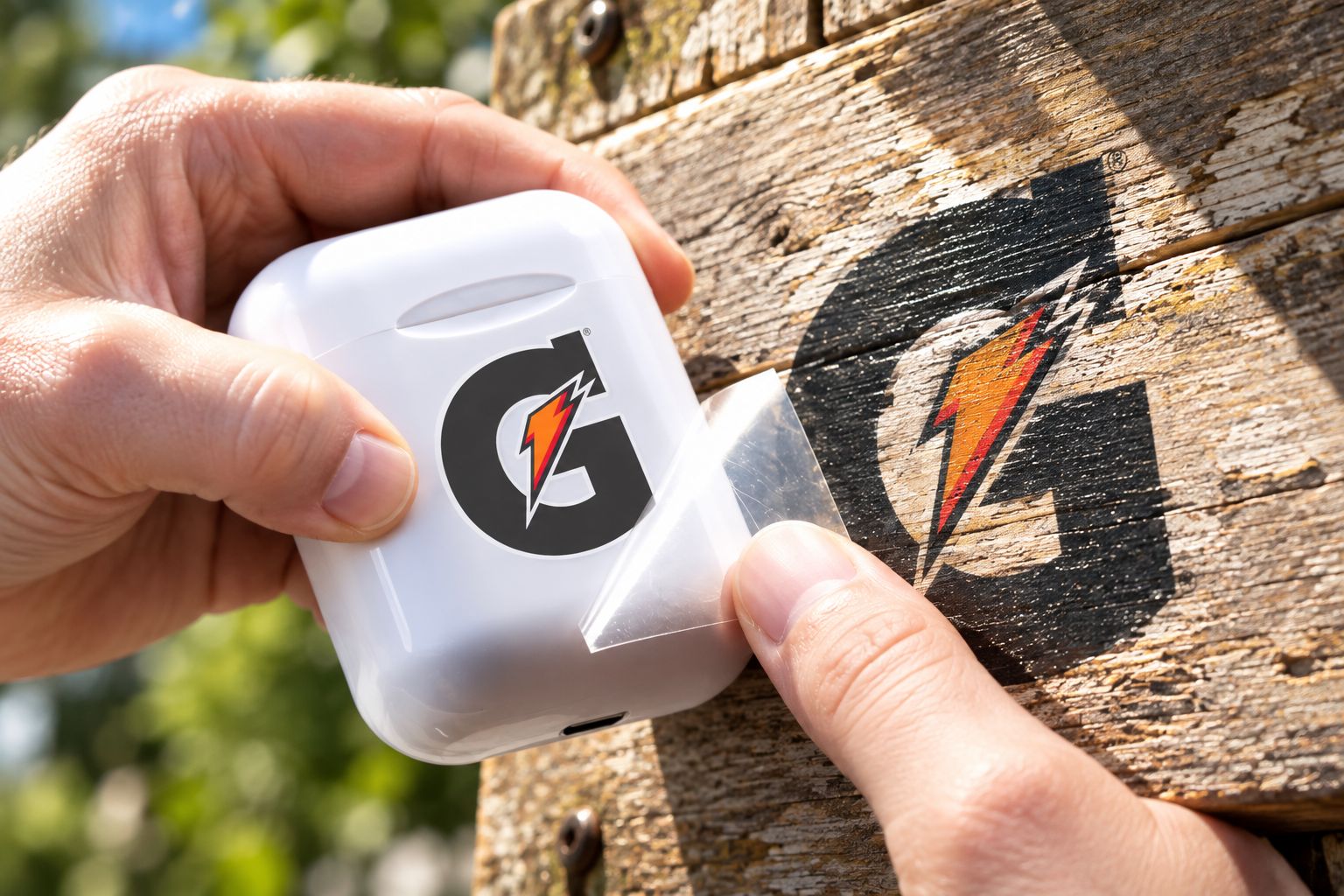
UV-DTF uses a UV-cured adhesive layer instead of a heat-activated one, which is why it bonds to wood, metal, acrylic, and glass — surfaces standard DTF was never designed to hold on. That makes it the right call for storefront signage, car and window branding, and drinkware that sits outside a good chunk of the year. The UV-DTF transfers for wood and metal signage guide covers substrate prep in more depth.
Premium UV-DTF Transfers pros:
- Bonds to non-fabric, rigid surfaces standard DTF can't touch
- No heat press required for most rigid-surface applications
- Holds fine detail well on small decals and drinkware graphics
Premium UV-DTF Transfers cons:
- Not designed for garments — it's a different adhesive system than fabric DTF
- Small decals need careful handling during transfer to avoid trapped air
Best for: signage, decals, tumblers, and any surface that isn't fabric. Verdict: Buy.
2. PRINT & CUT DTF Transfers: best outdoor DTF transfer for apparel and workwear logos
This is standard cut-to-size DTF on fabric — the format for roofing crews, landscaping teams, marina staff, and anyone putting a logo on a shirt that gets sun and a washing machine in the same week. It runs on DTF2GO's 9-color print system, which is what gets pigment coverage close to 97% of Pantone colors instead of the narrower gamut cheaper four-color setups produce.
PRINT & CUT DTF Transfers pros:
- Pigment ink handles both UV exposure and repeat washing
- Cut-to-size means no wasted film around small logos
- Color match holds up close to brand Pantone values
PRINT & CUT DTF Transfers cons:
- Still needs a proper heat press cycle to cure fully
- Single small orders cost more per piece than a gang sheet run
Best for: outdoor apparel, workwear, and hi-vis logos that also see the washing machine. Verdict: Buy.
3. 32" DTF Gang Sheet BUILDER: best outdoor DTF transfer for high-volume production without print-ready art
A print shop taking on a landscaping company's entire crew roster, or a golf course refreshing staff polos, needs volume without hiring a designer for layout. The Gang Sheet BUILDER handles that arrangement step in-browser before anything goes to print.
32" DTF Gang Sheet BUILDER pros:
- Lays out multiple designs on one sheet without a separate design tool
- Cuts cost per piece meaningfully versus ordering single transfers
- Useful for shops onboarding a new outdoor-apparel client fast
32" DTF Gang Sheet BUILDER cons:
- Takes more setup time than uploading a file that's already arranged
- Best value shows up at higher piece counts, not one-off orders
Best for: shops building outdoor apparel runs from scratch. Verdict: Buy.
4. 31" DTF Gang Sheet UPLOADER: best outdoor DTF transfer for batching print-ready designs fast
When the art is already sized and separated, uploading beats building. This format suits repeat print shop customers — trucking fleets, HVAC crews, pest control vans — that reorder the same design set season after season.
31" DTF Gang Sheet UPLOADER pros:
- Fastest path from file to production when art is ready
- Consistent results for repeat outdoor-apparel orders
- Works well for shops that already have a design workflow
31" DTF Gang Sheet UPLOADER cons:
- No layout help if the file isn't correctly sized already
- Not the right entry point for a first-time outdoor order
Best for: repeat orders where the artwork never changes. Verdict: Buy.
5. DTF Transfers Samples: best outdoor DTF transfer test before a bulk order
A spec sheet can claim UV resistance; a piece of film sitting on a windowsill for a week shows it. Before committing a golf course or a fleet of trucks to a full production run, a sample settles the color, hand-feel, and early fade question on the actual substrate.
DTF Transfers Samples pros:
- Confirms color and film feel before a large invoice
- Lets a shop test wash-and-sun cycles on their own timeline
- Removes guesswork on a first-time outdoor apparel order
DTF Transfers Samples cons:
- Not a production quantity — it's a test step, not a solution
- Adds a short delay before the real order ships
Best for: anyone who hasn't run outdoor apparel through DTF before. Verdict: Buy.
“Pigment ink is why direct-to-film wins over dye-based methods on anything that lives outdoors.”
How this ranking works
Each format was scored against the six criteria above: ink chemistry, substrate match, cure quality, wash durability, gang sheet economics, and whether a sample step exists to de-risk the order. Premium UV-DTF Transfers ranks first because it's the only format built for rigid, non-fabric surfaces that sit outside year-round. The apparel-focused formats rank by how a shop actually orders — one-off cut-to-size, high-volume without art, or high-volume with art already built.


Which outdoor DTF transfer should you choose?
For anything that isn't fabric — signage, decals, drinkware, car branding — Premium UV-DTF Transfers is the default in 2026. For apparel and workwear that gets both sun and a washing machine, the individual cut-to-size format on the 9-color print system is the safer buy over cheaper dye-based alternatives. Shops moving volume should pick BUILDER without print-ready art and UPLOADER with it, and anyone new to outdoor DTF should run a sample first regardless of which format they land on.
FAQ
What are the best outdoor DTF transfers for UV resistance in 2026?
Premium UV-DTF Transfers rank best for rigid outdoor surfaces like signage and decals, while cut-to-size DTF transfers rank best for outdoor apparel and workwear in 2026.
Is UV-DTF the same as regular DTF transfers?
No. UV-DTF uses a UV-cured adhesive built for rigid, non-fabric surfaces like wood, metal, and glass, while standard DTF is a heat-applied fabric transfer.
How long do DTF transfers last in direct sunlight?
Pigment-based DTF ink resists UV fade better than dye-based printing methods because the pigment sits as a solid particle rather than dissolving into the film. Actual lifespan depends on the substrate, climate, and cure quality.
Can DTF transfers go on metal or wood signage?
Standard fabric DTF cannot. UV-DTF transfers are built for that job because their adhesive cures under UV light and bonds to rigid surfaces instead of fabric fibers.
Do DTF transfers fade faster than screen print outdoors?
Pigment-based DTF ink generally holds color better under UV exposure than dye-based printing, though screen print with UV-stable plastisol ink can also hold up well; the film and cure quality matter as much as the printing method.
What's the difference between a gang sheet builder and an uploader?
A gang sheet BUILDER arranges multiple designs on one sheet using an in-browser layout tool. A gang sheet UPLOADER is for print-ready files that are already sized and arranged, which prints faster.
How do I test DTF transfers for UV durability before ordering in bulk?
Order a sample first and expose it to real sun and wash cycles on the actual substrate before committing to a full production run.
Are DTF transfers waterproof for outdoor gear?
DTF transfers resist moisture well once fully cured, but 'waterproof' depends on the substrate and application; a fully cured cut-to-size transfer on apparel holds up through normal outdoor wear and washing.
One last thing
The substrate mismatch is the single most common failure point in outdoor DTF work: a shop applies standard fabric DTF to a coated metal sign because it's the transfer they already have on hand, and it lifts within weeks. Match the format to the surface first, pigment ink to fabric, UV-cured adhesive to everything rigid, and the UV-resistance question mostly solves itself.


