


Print shops running cotton tees, poly-blend jerseys, and nylon jackets through the same production week need one DTF transfer format that holds cure and color across fiber types without a settings change between orders. This guide ranks five DTF2GO transfer formats built for mixed-fabric print shops in 2026 and tells you which one to order first.
- Individual Cut-to-Size DTF Transfers from DTF2GO rank best overall for dtf transfers for mixed fabric printing on small, combined orders.
- The 32-inch DTF Gang Sheet BUILDER wins for shops running high-volume mixed-design jobs across cotton and polyester in one batch.
- DTF Transfers Samples let a shop test cure and peel on its own fabric stock before committing to a full sheet in 2026.
- Premium UV-DTF Transfers extend the same production line to glass, wood and metal when apparel isn't the only order on the schedule.
Why this matters
Mixed-fabric orders are the default for print shops in 2026, not the exception. A single production run might combine a 100% cotton tee, a poly-blend jersey, and a nylon jacket, and a transfer built around one fiber type can crack, dull, or lift on another during the same press session.
Getting dtf transfers for mixed fabric printing wrong costs a shop reprints, refunded orders, and a customer who books the next job with someone else. Individual Cut-to-Size DTF Transfers solve this by pairing a print-and-cut format with a cure profile wide enough to hold across fabric types on the same platen.
DTF2GO builds its film stack on a 9-color print system run on Mimaki and Kodak DTF hardware, which is why a single transfer reads true color on a white cotton shirt and a heathered poly blend without a second pass. That color range covers roughly 97% of Pantone colors, which matters more once a shop stops running single-fabric batches and starts mixing fiber types order to order.
What makes the best all-purpose DTF transfer for mixed-fabric shops
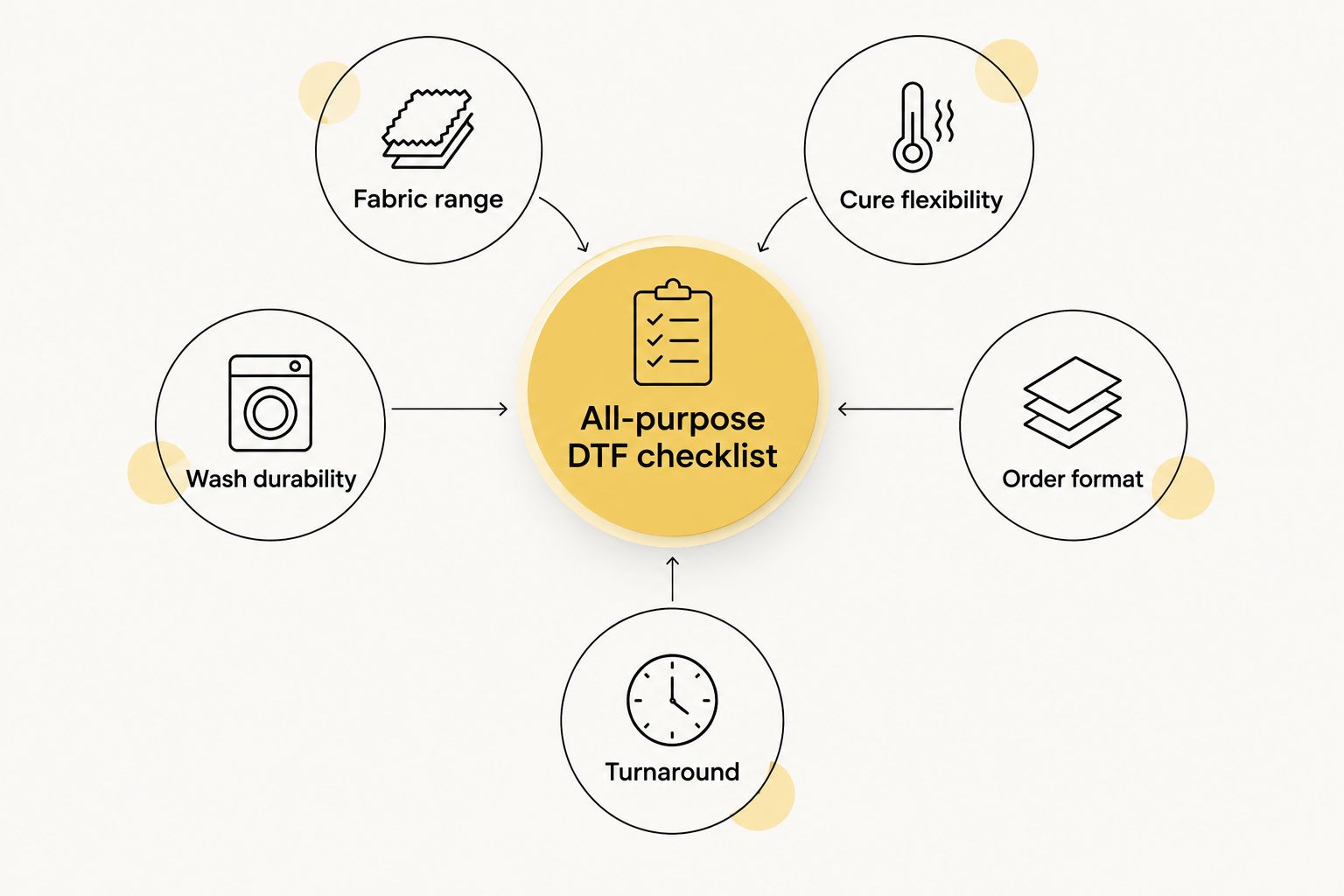
- Fabric compatibility range — holds cure and adhesion across cotton, poly, tri-blend, and nylon without a settings change between garments.
- Cure and peel flexibility — works with both hot-peel and cold-peel press cycles depending on what's loaded on the platen.
- Wash durability across fiber types — the image doesn't crack on stretch fabric or dull on synthetic fiber after repeat washes.
- Order format flexibility — available as single cut-to-size transfers and as gang sheets, so order volume doesn't force a format switch.
- Turnaround against order size — ships fast enough to keep a mixed-order queue moving without a minimum sheet count blocking a small job.
DTF transfers for mixed fabric printing at a glance
| Format | Best for | Standout feature | Key limitation |
|---|---|---|---|
| Individual Cut-to-Size DTF Transfers | Mixed small-batch orders across fabrics | Print-and-cut singles sized to the exact design | Loses per-unit efficiency at very high volume |
| 32" DTF Gang Sheet BUILDER | High-volume mixed-design production | Combines several designs across fabric types on one 32-inch sheet | Needs designs batched before printing |
| 31" DTF Gang Sheet UPLOADER | Print-ready art needing fast turnaround | Upload finished layouts straight to a 31-inch sheet | No layout or design assistance included |
| Premium UV-DTF Transfers | Shops decorating hard surfaces alongside apparel | Cures onto glass, wood and metal, not just fabric | Not built for soft, stretchy garments |
| DTF Transfers Samples | Testing fabric compatibility before bulk ordering | Small-format proofs run on your own fabric stock | Not sized for production runs |
1. Individual Cut-to-Size DTF Transfers: best DTF transfer for mixed small-batch orders
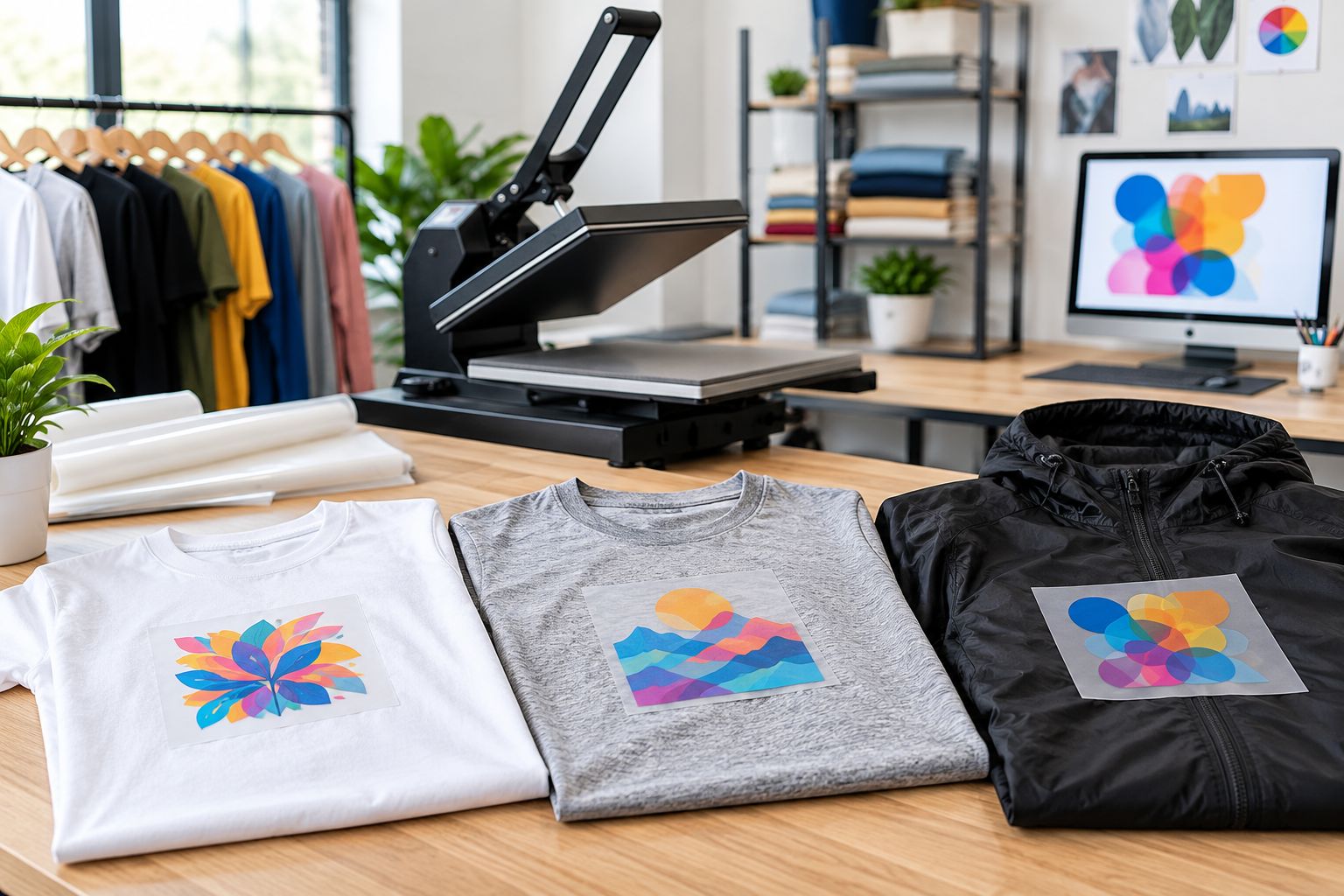
Individual Cut-to-Size DTF Transfers print and cut to the exact size of the design, so a shop running five fabric types in one afternoon doesn't have to build a full gang sheet for every order. Each transfer presses on its own, which means cure time and peel type can be dialed to whatever's loaded on the platen — cotton, poly, or a blend — instead of one generic setting for the whole batch. This is the format that answers dtf transfers for mixed fabric printing most directly: one order format, no batching required, no separate settings sheet to keep on the wall.
Individual Cut-to-Size DTF Transfers pros:
- Handles single-unit and small-run orders without waiting on a full sheet
- Presses cleanly at different temperatures for cotton versus synthetic blends
- No design batching or layout work needed before ordering
Individual Cut-to-Size DTF Transfers cons:
- Costs more per unit than a gang sheet once volume climbs
- Turnaround favors smaller quantities over bulk production runs
Best for: print shops filling mixed, low-quantity orders across different fabrics in the same week.
Verdict: Buy.
2. 32" DTF Gang Sheet BUILDER: best DTF transfer for high-volume mixed-design runs
The 32" DTF Gang Sheet BUILDER lets a shop lay out several designs on one sheet and print them together, which drops per-unit cost once order volume climbs past what single transfers can justify. It's built for a shop that already knows it's running cotton tees next to poly jerseys in the same batch and wants one sheet to cover both without splitting the job.
32" DTF Gang Sheet BUILDER pros:
- Maximizes yield when combining several designs and fabric types per sheet
- Cuts per-unit cost at higher order volumes
- Builder tool handles the layout work in-house
32" DTF Gang Sheet BUILDER cons:
- Needs enough order volume to justify a full sheet
- Layout planning adds a step small orders don't need
Best for: shops running bulk, multi-design jobs across mixed fabric types.
Verdict: Buy for volume production.
3. 31" DTF Gang Sheet UPLOADER: best DTF transfer for print-ready art on a fast timeline
The 31" DTF Gang Sheet UPLOADER skips the layout step entirely — a shop uploads finished, print-ready art straight to a 31-inch sheet. That's the right pick for a shop that already has separation-ready files for cotton, poly, and blend jobs and just needs them printed and shipped without a design pass in between.
31" DTF Gang Sheet UPLOADER pros:
- Fastest path from finished art to a printed sheet
- No design assistance needed if files are already print-ready
- Sheet width covers most standard apparel print areas
31" DTF Gang Sheet UPLOADER cons:
- Files with layout errors ship as submitted, with no review step
- Not suited to a shop that still needs designs arranged for it
Best for: shops with print-ready files who want turnaround, not layout help.
Verdict: Buy if your files are ready.
4. Premium UV-DTF Transfers: best DTF transfer for shops decorating hard surfaces alongside apparel
Premium UV-DTF Transfers cure onto glass, wood, metal, and other rigid surfaces, which matters for a shop that prints apparel most weeks but also fills tumbler or sign orders on the side. It isn't a fabric transfer — it's the format that keeps a mixed-fabric shop from turning away a hard-surface job because the equipment can't handle it.
Premium UV-DTF Transfers pros:
- Works on rigid, non-fabric substrates fabric-only transfers can't touch
- Keeps hard-surface orders in-house instead of outsourcing them
- Detailed graphics hold up on curved and flat surfaces alike
Premium UV-DTF Transfers cons:
- Not a substitute for a fabric transfer on soft goods
- Different application process than standard DTF, so staff need a second workflow
Best for: shops that get occasional drinkware, sign, or gift-shop orders alongside apparel.
Verdict: Buy as a supplement, not a replacement.
5. DTF Transfers Samples: best DTF transfer for testing fabric compatibility before a bulk order
DTF Transfers Samples give a shop a small-format proof run on its own fabric stock before committing to a full gang sheet. For a shop about to run a new fiber blend for the first time in 2026, this is the cheapest way to confirm cure and peel before the real order goes to press and ties up the platen.
DTF Transfers Samples pros:
- Confirms cure and peel on your actual fabric before a bulk order
- Removes the guesswork on a fabric blend you haven't run before
DTF Transfers Samples cons:
- Not sized or intended for production runs
- Adds a step for shops that already know their fabric mix well
Best for: shops onboarding a new fabric type or testing DTF2GO for the first time.
Verdict: Buy before your first bulk order on a new fabric.
How we ranked these DTF transfer formats
Each format above is scored against the same five criteria: fabric compatibility range, cure and peel flexibility, wash durability across fiber types, order format flexibility, and turnaround against order size. Individual Cut-to-Size DTF Transfers score highest on fabric range and order flexibility, which is why it takes the best-overall slot for dtf transfers for mixed fabric printing in 2026. The gang sheet formats trade some of that flexibility for lower per-unit cost at volume — a fair trade once a shop's order sizes justify batching designs together.


Which DTF transfer should you choose for mixed-fabric printing?
Default to Individual Cut-to-Size DTF Transfers if orders come in small and mixed — that's the format built for a shop switching fabric types order to order. Move to the 32" DTF Gang Sheet BUILDER once volume justifies batching multiple designs on one sheet, and keep Premium UV-DTF Transfers on hand if hard-surface orders show up alongside apparel. Run a DTF Transfers Samples proof first on any fabric blend the shop hasn't pressed before in 2026 — skipping that step is the fastest way to eat a reprint.
FAQ
What's the best DTF transfer for mixed fabric printing in 2026?
Individual Cut-to-Size DTF Transfers from DTF2GO rank best overall for mixed fabric printing in 2026 because each transfer presses independently, letting a shop match cure and peel to cotton, poly or blend fabric order by order.
Can DTF transfers work on both cotton and polyester?
Yes, DTF transfers adhere to both cotton and polyester because the film bonds to the fiber surface rather than requiring a fabric-specific chemical reaction the way sublimation does. Cure temperature and press time still need to match whatever fabric is on the platen.
Is there a minimum order for DTF transfers for mixed fabric printing?
It depends on the format: individual cut-to-size transfers are built for single-unit and small-batch orders, while gang sheets suit higher volume runs. Check the specific product page for current order details.
How do gang sheets differ from individual cut-to-size DTF transfers?
A gang sheet combines multiple designs on one large sheet for cost efficiency at volume, while individual cut-to-size transfers print and cut a single design to its exact size for smaller or mixed orders.
Do DTF transfers work on nylon or spandex blends?
DTF transfers can adhere to nylon and spandex blends, but these synthetic fibers are more heat-sensitive than cotton, so press temperature and time need adjusting to avoid scorching the fabric.
How long do DTF transfers last on mixed-fabric garments?
Wash durability depends on press settings matching the fabric type; a transfer cured correctly for the fiber on the platen will outlast one applied with a single generic setting across cotton, poly and blends.
Should I request a sample before ordering DTF transfers in bulk?
Yes, running a sample on a fabric blend you haven't pressed before confirms cure and peel settings and avoids a reprint on a full bulk order.
Are UV-DTF transfers the same as standard DTF transfers?
No. Standard DTF transfers are built for fabric and apparel, while UV-DTF transfers cure onto rigid, non-fabric surfaces like glass, wood and metal.
One last thing
Most reprints on mixed-fabric orders trace back to one setting: cure temperature carried over from the last fabric run instead of reset for the new one. Running a DTF Transfers Sample on every new fabric blend before the bulk order costs one small press cycle and saves the full reprint — a cheap trade for any shop still building its 2026 fabric library.


